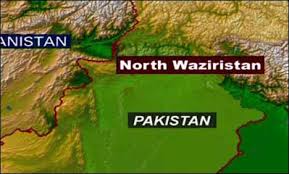
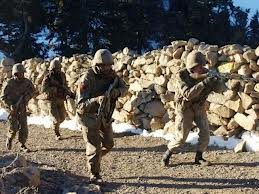
ISLAMABAD: The government is all set to launch a ground offensive in North Waziristan Agency, signalling a paradigm shift in its policy. Talking to The Express Tribune, both government and security officials confirmed that the civil and military leaderships have finally concluded that a targeted military operation is now ‘unavoidable’.
A high-level meeting chaired by Prime Minister Nawaz Sharif and attended by army chief General Raheel Sharif and other senior officials on Thursday discussed several options to deal with the Taliban in the face of a recent surge in attacks carried out by the group.
One official, who asked to remain anonymous, disclosed that there was a ‘greater realisation’ among all stakeholders that certain groups will never enter into dialogue and will have to be dealt with the use of force. Sources said the decision to initiate a ground offensive in March is believed to be taken on account of the challenge posed by the harsh winter in North Waziristan to security personnel operating in the agency. However, surgical strikes may soon be carried out against Taliban hideouts ahead of the targeted operation in the tribal region.
When asked a security official pointed out that the military was ready to take on the challenge. “We [the army] have the capacity and the will to eliminate all such groups which are not willing to reconcile,” said the official.
Pakistan has long resisted foreign pressure to launch a ground offensive in North Waziristan, which is considered a safe haven not only for TTP, but several other groups, such as the Haqqani Network.
It is unclear, however, whether the March operation will also target the Haqqani Network.
One retired officer, who is still closely connected with the security establishment, said the Haqqanis by now probably understand that the operation in North Waziristan is inevitable.
“The Haqqanis have strongholds in Afghanistan’s three provinces and they will definitely move out of North Waziristan before the start of any operation,” the retired two-star army officer told The Express Tribune.
However, he said a military operation should have been carried out much earlier and a lot of time had already been wasted in the name of peace talks.
The Express Tribune has also learnt that the recent air strikes in North Waziristan were carried out after security agencies exploited divisions within various outfits operating in the region. Some of the groups, which are willing to hold peace talks, had provided ‘key intelligence’ about the presence of senior TTP commanders and other foreign fighters in Mir Ali and Miramshah.
On the other hand, a senior cabinet member said the government would still hold talks with groups willing to reconcile. “But those who are not willing to accept our peace offers will have to be dealt with accordingly,” he added.
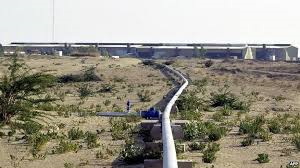
LAHORE, Feb 10: Civic, industrial and commercial activities almost came to a halt as most areas of Punjab passed Monday without gas due to an explosion in three main pipelines in Rahimyar Khan the previous day. Gas authorities say the situation will start improving from Tuesday (today).
“It is perhaps the worst-ever gas pipeline blast in Punjab as it caused over 45 per cent gas shortfall (700mmcfd) in the 1650mmcfd quota allocated for the province in winter. Before the incident, 950mmcfd was flowing in the blown-up pipelines,” Minister for Petroleum and Natural Resources Shahid Khaqan Abbasi told Dawn on Monday.
He said SNGPL teams had started repair work and hoped that supply to domestic consumers would be restored by Tuesday afternoon and that to industry by Wednesday afternoon.
He said the gas pipelines of 18-, 42- and 36-inch diameter had been damaged by the blasts, but luckily a 24-inch pipeline remained safe. This enabled the SNGPL to provide gas to domestic consumers partially on Monday. “However, most domestic consumers are either facing extreme low gas pressure or getting no gas,” Mr Abbasi said.
He said he had asked an additional secretary of the ministry to hold an inquiry into the blast. Rahimyar Khan District Police Officer Sohail Zafar Chattha said initial police findings suggested that the blasts might have been caused by gas leakage. He said police had collected some metal parts from the site and sent them to a laboratory for analysis. Police will be in a position to say whether it was a terrorist activity or accident only after receiving a report from the laboratory.
Mr Chattha said police had found an IED (improvised explosive device) in the same site a month ago. “We gave a cash award of Rs10,000 to the man who provided the information about presence of the IED.”
He said police had recently provided SNGPL security guards to protect its pipelines and other installations, but the company was required to hire its own guards.
Life was badly affected in Lahore, Faisalabad, Multan, Sargodha, Sahiwal and other towns and cities in the province.
In Lahore, the situation was miserable as a majority of people, including schoolchildren, left homes without having breakfast. There was no gas for commercial ovens (Tandoor), leaving the people with no option but to arrange food from bakeries.
People were also seen either buying firewood or LPG cylinders for cooking.
“You cannot imagine how we spent the whole day. After sending my children to school and husband to his office on empty stomach, I myself came out to purchase some wood to prepare lunch,” said Sakina of Rehmanpura (Ichra).
Aqeel Ahmad, of Wapda Town, said he burnt some waste furniture wood lying at his home to help his wife cook something.
Saleem Shahid adds from Quetta: The banned Baloch Republican Army has claimed responsibility for the blasts in the gas pipelines in Rahimyar Khan. Calling journalists from an unidentified place on Monday, its spokesman Sarbaz Baloch said the BRA had blown up the pipelines because these were supplying gas to Punjab from the Sui gas field in Dera Bugti district, Balochistan.
Baloch youth picked up (Credit: balochistanhcrblogspot.com)
KHUZDAR – Khuzdar administration on Monday exhumed at least 11 more decomposed bodies from a mass grave discovered in Mayy area of Tutak, about 50-kilometre from Khuzdar city. The bodies are too decomposed to be recognised. A couple of days earlier on Sunday, two bodies were recovered from same area.
“At least 11 decomposed bodies were brought to District Headquarters Hospital Khuzdar,” said medics at hospital adding, “The bodies were decomposed beyond recognition like the two discovered earlier in Tutak, a desolate place far away from the main population centre.”
Total 13 bodies have so far been recovered and all of them were buried in Police Line graveyard in Khuzdar in presence of law enforcing agencies.
Deputy Commissioner Khuzdar Waheed Shah said that Balochistan levies personnel have again started digging the area. The identity of the bodies could not be ascertained; however, he added, that DNA test might help determine the identities.
“There could be few more, as we saw human remains,” said an official on the condition of anonymity. Presence of vulture and other wild birds attracted the attention of the shepherds who informed the district administration about the mass grave.
Baloch nationalist parties and relatives of the missing persons claimed that the victims could have been abducted and killed in official custody. “We fear that these bodies belonged to missing persons. Judiciary and Human Rights Watch should press the government to carryout a transparent investigation into this humanitarian issue,” said nationalists.
A shutter-down strike was observed in different Baloch-dominated districts on the call of Baloch National Front. The strike was observed in Turbat, Panjgour, Nushki, Kalat, Mastung and others area of the province where shops and markets remained shut.
Meanwhile, the Human Rights Commission of Pakistan voiced its serious concern over the discovery of decomposed bodies in Khuzdar district, calling upon the federal and Balochistan government to urgently establish identity of the deceased and their killers.
In letters written to the federal interior minister and Balochistan chief minister, the HRCP noted that the bodies were far too decomposed to be recognisable. So far there was no information about who the deceased were and who killed them. Initial reports suggested that the persons had died around a month earlier and parts of their bodies had been eaten by wild animals.
According to reports and eye-witness accounts, there was a camp in the neighbourhood where some proxy gangs operated against the tribesmen who were not supporting them. It is more possible that the opponents were picked up, killed and dumped in the mass grave as a part of policy.
The HRCP demanded that a thorough probe must be initiated and all efforts made to establish the facts in the case and bring the perpetrators to justice. If necessary, DNA tests should be conducted at the earliest to identity the deceased, it added.
“Such an investigation is all the more vital in view of the spate of violence, targeted killings and enforced disappearance and dumping of dead bodies of missing persons in Balochistan in recent years. The HRCP also called upon the government to facilitate relatives of missing persons who are keen to learn if the deceased included their dear ones.
The HRCP also urged the federal and provincial governments to find a solution to the violence, lawlessness and killings in Balochistan and stressed that such a solution must respect due process and human rights and that emphasis should be placed on finding political means to address the challenges.
KARACHI, Jan 30: The Muttahida Qaumi Movement (MQM) said on Thursday it had no links with the two persons identified in a BBC programme as suspects in the murder of Dr Imran Farooq, a senior leader of the party.
The party criticised BBC for making a documentary against the MQM and its chief Altaf Hussain and said the purpose of “the media trial” was to “influence the courts as well as the murder investigation in the UK”.
In its Newsnight programme, the broadcaster named Pakistani students Mohsin Ali Syed and Mohammad Kashif Khan Kamran as the suspects. It said the record showed that the two left the UK on Sept 16, 2010, a few hours after the assassination, and flew to Sri Lanka and then on Sept 19 to Karachi. They were detained in the city.
Mr Farooq was stabbed outside his home in Edgware, London, near the MQM’s international headquarters.
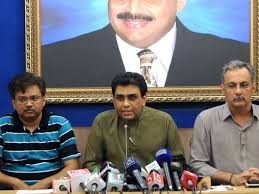
At a press conference in Karachi, MQM leader Dr Khalid Maqbool Siddiqui made it clear that the party had no links with the two “suspects” and that it was the responsibility of the British government to charge them with the murder.
He said the MQM also did not know Atif Siddique, the person named as the sponsor of the two men for their UK visa.
The MQM leader wondered why the British authorities had allowed Mr Syed and Mr Kamran to leave the UK if they were wanted for their involvement in Dr Farooq’s assassination.
Accompanied by Dr Farooq Sattar and Barrister Farogh A. Nasim, Dr Siddiqui said that the MQM was being victimised in the UK. He said Mr Hussain was a coin collector, but the British investigators had seized his collection and also the laptop of his daughter.
Rejecting the report, the MQM leaders said that Muttahida believed in freedom of the press, but the BBC programme was aimed at spreading false propaganda and “we believe it is the media trial of the MQM and Mr Hussain”. Barrister Nasim said the report was based on speculation and contained no fact.
He said he had responded to the allegation of money laundering in the BBC programme, but that part was edited out. He said BBC was being fed misleading information by the MQM’s opponents and announced that a legal course of action would be adopted against it.
PROSECUTORS’ REQUEST: According to the BBC report, British prosecutors have asked Pakistan to trace Mr Syed and Mr Kamran, who are believed to be in Pakistani custody but not under formal arrest.
The investigation has seen more than 4,000 people interviewed, but so far the only person arrested has been Iftikhar Hussain, nephew of the MQM’s chief.
Iftikhar Hussain was arrested on suspicion of conspiracy to murder, but is now on police bail. It is an arrest the MQM says was based on wrong information.
Barrister Nasim described Iftikhar Hussain as “not a person who is really with himself mentally” and added that Iftikhar Hussain had suffered at the hands of the Pakistani authorities.
In November 2011, Metropolitan Police chief Bernard Hogan-Howe said his organisation was liaising with Pakistani authorities over the arrests.
The Pakistan government has denied anyone has been arrested and officials had not replied to questions about the request from the UK’s Crown Prosecution Service.
Documents obtained by BBC from official sources in Pakistan suggest Mr Syed and Mr Kamran secured UK visas on the basis of admission to the London Academy of Management Sciences (Lams).
The documents name two other men. One is Karachi-based businessman Muazzam Ali Khan, who is believed to have endorsed the suspects’ UK visa applications and was in contact with Iftikhar Hussain throughout 2010
The other is Atif Siddique, an educational consultant in Karachi, who is believed to have processed them. Mr Siddique said he was not the agent of Lams and did not know the two suspects.
Mr Syed arrived in the UK in February 2010 and Mr Kamran in early September 2010.
Phone records indicate the two moved around together and it is believed they kept Mr Farooq under surveillance.
Iron Man, SP Khan, the lead character of the Bollywood movie Shootoutat Lokhandwalaand our own late Sultan Rahi of Maula Jatt fame; my friend, Chaudhry Aslam has been compared with all of these. However, the former three were merely fictional, while Aslam was the real character. After Friday prayers this week, in a leafy suburb of West London, prayers were said for his departed soul with everyone present uttering a louder than normal and heartfelt ‘ameen’ as if they all knew Aslam. This only proved that he had developed a global following, just like all these fictional heroes he has been compared with.
I can recall the early days when I got to know Aslam as a sub-inspector, serving under my late father Arif Jah Siddiqui in District Central, Karachi. Aslam had his first posting as SHO of the Gulbahar police station. Two things were very clear from the onset: he was devoted to eradicating crime and was fearless to a fault. He never had time to deal with the bureaucracy of police work — and believe me, there is a lot of it if you are responsible for a police station or a team. He would delegate all this to his trusted subordinates and instead, took up the onerous task of patrolling the roads and narrow lanes of his area. He always believed that if policemen were doing their jobs out in the open, people could see them and feel more secure, while criminals would think twice before committing a crime. His style was uncomplicated and that was the reason that officers and jawans developed a strong loyalty to him.
Aslam encountered many difficulties during his career; however, his morale was never subdued. He was imprisoned for more than a year and a half. Even during this period in Central Prison Karachi, whenever I visited him, he was in good spirits and this kept the morale of his fellow imprisoned officers and jawans high as well. He was a man with a big heart and took special care of his subordinates and their families, giving both his time and money generously to help them in their hour of difficulty. When he was bailed, he made sure that every member of his team was treated fairly. Finally, all of them were acquitted of the charges that had been levelled against them.
Despite getting rapid promotions, he never gave up frontline detective and investigative work. As a matter of routine, he would be busy all night, seeking information, planning surveillances, plotting raids and travelling to some of the most hostile parts of Sindh and Balochistan to assess the ground realities. This hard work and diligence made him a very successful police officer. He would delegate tasks but would never lose control. The junior officers knew that their boss was very much on the ground, so they had to do their jobs as thoroughly as possible.
The other aspect of his personality was his accessibility to everyone, including the vast network of his informers, journalists, colleagues and friends. He would answer his mobile directly, so much so that if anyone needed to meet him in his office, one would just need to call him on his mobile and he would ask the guard to allow the guest to come through the checkpost. He was a people’s man and had no desire for protocol, a secretariat or a posh office.
From the time he took command of the anti-extremist cell of the CID, he had to severely restrict his movements. Whenever, during my visits to Karachi, I went to see him, we would walk around the CID compound for hours exchanging notes. On occasions, I felt that he had huge pent-up energy, which needed to be released but he did not have the luxury to vent it like a normal person would, by freely moving around the city and socialising. On these instances, he came across as a lion in a cage, pacing the available space up and down.
Aslam had made many enemies, a negative fallout for all diligent police officers. The principal reason for this was that he was among the very few officers, who had the courage to take action against all types of criminal syndicates operating in Karachi. There have been some discussions about his approach towards eradication of crime. He has been marked as brutal and unforgiving. I question these commentators as they may not know the circumstances under which these officers are required to keep the average citizen safe and secure. They work on severely depleted resources, are under constant threat as are their loved ones and know that one wrong step can get them embroiled in litigation, and they may even end up facing imprisonment. Is there any other profession where a person takes on such enormous risks? One should not forget that the police service is merely a reflection of the society it serves and we fall far short of being an ideal society.
Aslam’s martyrdom is an international tragedy. His work has been instrumental in stopping large terrorist attacks in Pakistan and other countries. He delivered results at the frontline of the war on terror and in the end, gave his live in protecting innocent citizens, and eradicating crime and terror from this world.
I met him on January 31, 2013 at the funeral of another martyred officer. Little did I know that this would prove to be our last meeting. I pleaded strongly with him that he should take a break from this madness of fighting terrorism and come with me to the UK. He responded in his typical friendly style, “Aftab bhai would you take the whole of Karachi with you?” I said I could not do that but wanted him to come with me, and he said, “Bhai, don’t worry. I will be okay here,” and that was Aslam. I will always remember him as a man of high morale and a police officer dedicated to his profession to a fault.
Published in The Express Tribune, January 12th, 2014.
December 27, 2013 marks the sixth anniversary of the murder of Benazir Bhutto and there is no indication that we are any closer to knowing on whose orders the killing was carried out. The PPP, led by Asif Ali Zardari, swept to a landslide victory in the election that followed her death, and it might have been expected that every resource at its disposal would have been deployed to catch those responsible. Little could be further from the reality. There was no post-mortem so there is no clear determination as to whether she died of gunshot wounds or the result of striking the door of the armoured hatchway of the armoured capsule she was in at the time — or possibly a combination of both. Whatever forensic evidence was on the scene was washed away within an hour of her murder and subsequent inquiries into her death have reached no clear conclusions either.
The UN report into the case, which had been demanded by former president Zardari, was sharply critical. It concluded that her death could have been prevented if appropriate security measures had been in place, and that the Scotland Yard forensic investigation team were gravely misled by the Pakistan police. The intelligence services were less than helpful and Rehman Malik, responsible for Benazir Bhutto’s security at the time, is said to have been unable to provide a straight answer to any of the UN team’s questions. The conclusion of this report was that the failure to properly investigate her death was deliberate and the conspiracy mill remains in uninformed overdrive. On the day she died, none of the agencies tasked with her protection were adequately discharging their duties and subsequent to her death, their investigation has been at best flawed, at worst deliberately hindered. The chances of ever getting to the truth fade almost by the day. Commemorative rallies and functions in celebration of the life of Benazir Bhutto are no substitute for an open and honest investigation. Going by the past six years we expect no early result.
Published in The Express Tribune, December 27th, 2013.
Gas Station in South Waziristan (Credit: dawn.com)THE LAST CHECKPOINT: Ostensibly, Angoor Adda is the last outpost in South Waziristan (which is better patrolled compared to North Waziristan because of the presence of two infantry divisions, the 40th and the 9th. A part of the evolving COIN/CT tactics is ensuring that military patrol vehicles have no obvious army markings, sometimes even non-army colours: Just the Pakistan flag and what the army calls the ‘national slogan’: “God is great”, as is seen on this converted pickup truck used by a Frontier Corps Wing.
Day 3: 1440
Sararogha, South Waziristan, at 327 Brigade HQ, 40th Infantry Division
“Unacceptable”
The mood here is pensive. I was here in the spring, when most of the IDPs had returned, and the brigade commander and his staff were boisterous about their recent achievements. From sanitisation operations, which are small-scale “mop up” engagements, to tracking sub-tribal politics, they seemed sure of themselves. Now, most of the junior officers (the adjutant, the brigade major) are the same, but the new brigadier is still settling in. Almost everybody is off-colour. They’ve just been recently hit, hard.
The new brigadier got a bit of a welcome party in just his first week, officers recall. They had picked up signal chatter a month ago, but they hadn’t been able to process it because the intel was too disconnected. All they knew was that the insurgents had gotten hold of some uniforms. That’s it.
Meanwhile, the army’s new “digital camo” uniforms had still not arrived for all the units stationed in this sector held by the 327 for a couple of years now. Some of the officers who had been to Pindi for down time or briefings were sporting the new gear. Most of the rest of the troops were not. That proved to be a critical logistical lapse. When they came in, around a week into the new brigadier’s stint, the six insurgents were all wearing the old uniforms. So they blended in, because so many units move up and down the new road. That allowed them to take the initiative: all you need in an engagement here.
The firefight lasted a couple of hours. Three of the insurgents were gunmen, the other three “suiciders”. Before he blew himself up, one of them even managed to get just inside the ring of fire, the Brigade Headquarters’ officers’ complex itself, ironically built around the residence of Khan Gul, a militant commander who was killed in a drone strike in 2012. The 327 took losses: one soldier was killed, two injured. They hadn’t seen them coming. That’s why the officers were pensive, even angry at themselves.
Later, visiting the public square cum market the 40th Division has built (which features a tailor, a butcher, a tea stall, a hardware depot, a blacksmith, even a barber-shop, which is a tough sell around these parts), the edginess didn’t disappear as interactions with the locals began.
“We haven’t had an attack here in months. More than a year, even,” said a captain. “An attack of such scale doesn’t mean they’re coming back. But it means they’re around. And it also means there was some sort of local support. After all we’ve been through together, the locals and us, that’s unacceptable.”
THREAT ALERT, YELLOW: A watchtower at the headquarters of the 9th Division in Wana, South Waziristan, with a newly installed alert-o-meter. Most of the attacks in South Waziristan are now limited to IEDs and not direct assaults on army installations, though a recent ‘complex attack’ on a brigade headquarters in Sararogha lasted for hours.
A Punjabi officer shouted out greetings in recently learnt Pashto, which were reciprocated. But the locals, though friendly enough, sensed the anxiety and some gave it right back. A local Malik praised the road the 40th had built. A young retailer, who had lost two of his elder brothers as they fought for the FC, showed off his wares from a shop that he had been granted for free; but there was tension. Even the local kids were apprehensive, compared to spring.
Before Rah-i-Nijat, Sararogha was the “tactical headquarters” of Baitullah Mehsud. When he conquered a Frontier Corps fort here, Mehsud razed it to the ground and distributed the bricks for people to reinforce their homes with. He was so angry with the stiff resistance the FC had put up that he forbade any of the bricks be used for a mosque. This place was the TTP’s seat of power till three divisions secured South Waziristan. Today, Sararogha has a girls’ school, though it’s not very well attended.
The Army is proud of its rehab and development work here, especially the road that runs from north to south through the town, connecting it to Jandola, and further on, to the settled area of D.I. Khan via Tank. But the army versus local divide persists, heavily dependent on how individual officers breach it. The former 327 brigade commander had actually learnt the local variant of Pashto, and was married to the place as he volunteered for a second tour here. Other officers choose to be more distant. It’s a personal choice.
SEATING ARRANGEMENTS: Medicine distribution camps, like this one just outside Sararogha, South Waziristan, run by an engineer, are an attempt by the army to regain the trust of the locals. Seats are a new induction by the organizers; camps without seats are usually subjected to chaos, as ‘queuing up’ is considered derogatory in the local ‘riwaj’, or culture.
Operationally, the weakness of gathering and then processing tactical intelligence remains, and the recent attack proved it. Though chatter gets picked up by signals officers embedded with infantry units, with local Pashto specialists aiding them, there is no one, uniform method by which intel is processed. A few officers showed me the 327’s procedure: an Excel spreadsheet, complete with smart functions, that the brigade has developed to match and tally chatter with insurgent operations; but its retrospective, they admit, not allowing them to always pre-empt a militant strike before it happens.
There’s also a capacity problem; at the brigade level and lower; crucial chatter transcriptions will not travel all the way up on busy days. They tell me about the Russians, who had a KGB officer embedded with every unit, back in the day. The Americans too have intel specialists built into smaller, forward formations, across the border. No such thing in Pakistan’s units: the old spy/soldier divide remains, and the spies only talk to the brass, at Division HQ. The directives for singular platforms, where sharing and processing of vital pre-operational data is built around ‘netcentricity’ will have to come from the Military Operations directorate, they surmise.
“They’re working on it,” says a major, accepting a warm Mountain Dew from a local bakery owner. “The MO is always working on something.”
Day 4: 2030
Spinkai-Raghzai, South Waziristan, Officer’s Mess of (unnamed) Baloch Regiment, 327 Brigade, 40th Division
“The Hunting Party”
“It’s VUCA,” said the commanding officer (CO), whose unit patrols the eastern shoulder of what the Army calls the ‘Mehsud Triangle’ – the gaping area once dominated by Mehsud tribesmen that is now flanked on the east by the 40th Division and held on the west by the 9th Division. “It’s totally VUCA, this place.”
“Volatile, Uncertain, Complex and Ambiguous,” he wisps into the smoke filled room, with Hamid Mir pontificating on the flat screen. “Volatile because the nature, speed, volume, magnitude and dynamics of events change all the time. Uncertain because of the lack of predictability of events and issues. Complex because of the interconnectivity of various and different parts that confound those issues. And ambiguous, because reality is hazy, mixed confusingly with the meaning of conditions.”
STILL NEEDS BODY ARMOUR: Years after the peace deal that was inked here, this trooper in Shakai’s 124 Brigade still need armour to move around his “AOR”, or area of responsibility, as volatility and violence persist. The heavy footprint chafes locals, but the army fights tensions with free medical camps and roving clinics.
We’re having, believe it or not, perfectly crusted chicken pot pie. Complete with cheese, mushrooms, potatoes and Dunhills. “I picked up the recipe at (names the Western military academy he’s recently trained at). The chef here took some time to adapt to it. We don’t have much to do here except fight and eat. So we do both…we have a lot of time to improve both those skills.”
Under a picture of the Chief of Army Staff and the colonel commandant of his regiment, there is a framed still from the field. I count 18 in all, officers and soldiers, wearing their tac-gear, bandoliers and a Waziristani sunburn, looking like they all need sleep and showers. The name and date of the operation, which happened this summer, and a commendation from the 327 Brigade, is etched under the picture.
“That was fun…A hunting party,” says the CO. “We had been picking up chatter for days and we knew, roughly, of a location that these guys were hiding out in. We had estimated around 20 to 30 of them to be there. So I put together a contingent, got permissions, and took off. We were tired of sitting around.”
“We pre-streamed two fully charged iPads with the estimated Google Maps location our intel had indicated these guys were at. We drove for half a day, till the track finished. We kept going, on foot, on light rations, and dropped our heavy weapons. We walked for two days and nights. We slept on the rocks, and hid in caves. We moved at night. We had borrowed these new lights [gear specifics cannot be named] from the SSG [Special Service Group, the army’s special operations formation], which helped us along.”
COBRA COMMANDER: An AH-1 Cobra gunship gets ready for take-off at the 9th Division’s aviation base, in Wana, South Waziristan. The army first deployed the AH-1 in the 1980s in an anti-armour role against India, especially around the South Punjab axis. But most of the army’s Cobra squadrons now rotate in and out of FATA for what are, strictly, anti-terror operations. Fitted with night-vision devices, Cobras provide air cover for ground troops, perform aerial ‘show of force’ patrols and reconnaissance, and conduct independent ambushes, pursuits and raids as well. They’ve helped the army reduce IED casualties, which mounted or on foot troops are subjected to on the ground, but they’re expensive to maintain.
“When we made contact, on the third afternoon, we had just 12 percent of batteries left on our second iPad. I remember that. Most of our cigarettes were also gone, which is always a bad sign. We were getting tired. We had Steyrs [Austrian-made sniper rifles], a couple of Dragunovs [Russian-made sniper rifles], RPGs [rocket propelled grenades], and our regular kit with SMGs {Type 56s, Chinese variants of the AK-47].”
“Our intel had been good on location, but bad about the numbers. There were more than 20 of them. Much, much more than 20. We engaged through our snipers from the high ground, then took out a couple of their compounds with the RPGs. They swarmed out, and kept coming, from a hidden enclave in the rear that we hadn’t seen. We kept engaging.
THE COMM MAP: In the COIN/CT theatre of South Waziristan, communications ‘on the fly’ mean being able to talk with dozens of check-posts and positions that are spread out over several kilometres. Here’s a ‘radio map’ mounted on an officer’s car in one of the three brigades that form the 40th Division. The map is changed often, and randomly, to stop the militants from ‘counter-intercepting’ military chatter.
“They had solar panels. They had sat phones. They had mortars. The hot part of the engagement lasted around 45 minutes.
“We eventually called in aviation. We had to, as I didn’t want to carry a single shaheed back. But Google Maps, Zindabad.
“I don’t have drones and satellites, but I have what the Americans don’t: ownership. That’s why we’re innovative. We could have just sat there and done nothing, or we could have engaged. So we engaged and had a hunting party. More pie?”
Day 7: 1400
Angoor Adda, South Waziristan/Afghanistan border, Wing Headquarters of (Unnamed) Wing of Frontier Corps, 9th Infantry Division
“Hotline”
This place looks like the end of the world. Ridgelines that look like blunted razors, dust that stings and sun that cuts. For many, the world does end here, as Afghanistan begins. But the locals keep on living and moving. Mostly Wazirs, they come and go across the border: on foot, on motorcycles, in pick-up trucks, sedans and lorries. The border crossing is manned by one of the older FC wings. The commandant is a Punjabi, but all the men are Pakhtun. It’s a normal day, as the FC is doing its regular border patrolling. Truck drivers are allowed to brandish weapons to protect themselves. This is Wazir land, after all.
THE LAST GAS STATION ON EARTH: Less than a mile from the Durand Line, this sole petrol pump in Angoor Adda, South Waziristan, has been both a crucial lifeline for the local transport as well as the sight of several gunfights. Disagreement over priority access between armed groups, especially when supplies are low, has often resulted in violence. The station pumps all sorts of fuel: legal petrol from Pakistan, and the not-so-legal supply that comes from across the border, even Iran.
They’re more laid back than the Mehsuds, these Ahmadzai Wazirs, who dominate here with five sub-tribes, rivalled by the Sulaiman Khel, who have two sub-tribes. Four Taliban groups – Shamsullah, Halimullah, Malang and the feared Commander Nazir Group – operate here, abetted and/or rivaled by at least five “independent” Taliban field commanders: Khalid (Zali Khel), Sultan (Toji Khel), Tariq (Punjabi), Gade Khan (Toji Khel), Waliullah (Gangi Khel) and Saifullah (Toji Khel). The tribal-militant matrix is confusing, and I have to go through an organogram that the commandant makes in the dirt with his cane to understand the rules. What’s obvious enough, however, is the strongest political and physical structures in town are, ironically enough, the consortium of mosques that are led by four Maulanas of varying hues. The state doesn’t matter here, nor exist; except for the FC, whose commander gets by on good will, using his 395 Corpsmen and 26 regular army troops to build schools, repair shops, attend the jirgas and, of course, play bad cop.
A construction crew is working a new petrol pump, as the old one has seen too many firefights break out for possession and first dibs when the supply is low. As this is a transit point of a border town, I see more women – covered up of course – than I have seen so far. There are no slits in the burqas, like the ones you see in the mainland; just pierced pocks. Nor are they black, also a mainland trend, neither red, as seen in Kabul. This is white and blue burqa land. Only pre-pubescent girls are un-burqa’d, but even a four-year-old has a dupatta.
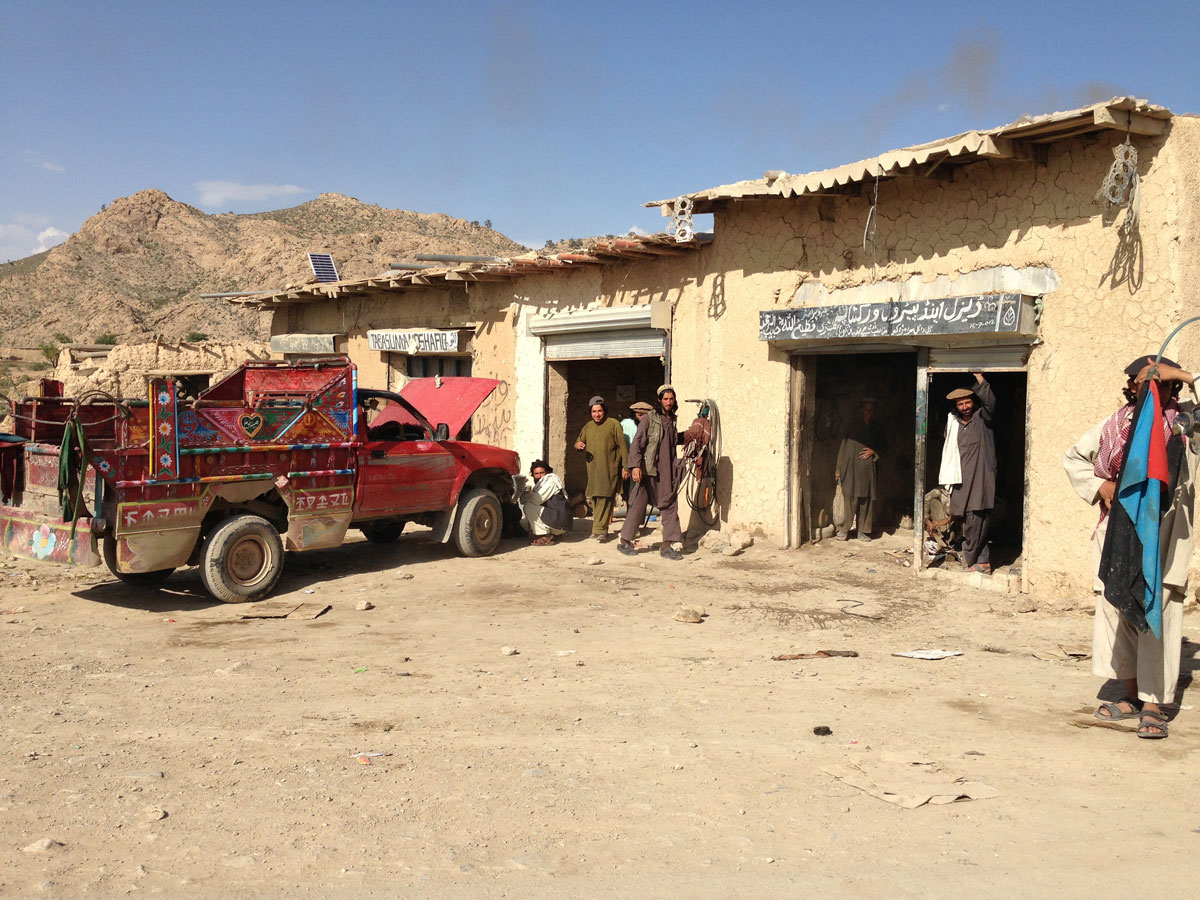
NOT THE DEVIL’S WORKSHOP: Car mechanics at work in Angoor Adda’s central bazaar. With the absence of gas stations, workshops like this also provide petrol and diesel fills, and according to an intelligence official, excellent insight about whose using the local roads, what they’re driving, and where they’re headed.
Kids in uniforms from a local school are crossing over to go back to their homes on the Afghan side. So is a chicken vendor with a low-flung Hilux filled with birds and assistants. The Durand Line is less than well imagined for these divided tribes: For them, it’s sub-fictional. Here, they’re married to their land, not their countries. My roaming indicator shows that only an Afghan cellular service provider is available. This is the Pakistani part of Tribalistan, really. The market itself is subsistence-level; everybody is driving some beat up version of a Toyota. “Woodtrade, coal, livestock, agriculture” are the professions that my intel briefing claims the locals are involved in, but I spot a few mechanics and some madressah students; most men are just ambling around.
SCHOOL OF WAR: Students, like this young one from Chagmalai Model School for Boys near Jandola, South Waziristan, have been deprived as well as enabled by the Waziristan war machine. Without the military’s presence in the region, they wouldn’t have a school to go to, as the army funds and sends volunteers and cadets to teach at such institutions. But army presence is also accompanied by military operations as well as the restrictions and dangers for the local population.
Troops from the Afghan National Army (ANA) are stationed around 30 metres away from the official border crossing, which is better paved on the Pakistani side thanks to a new road the Corps of Engineers have laid with American and UAE funding. A couple of the ANA are wearing baseball caps, one red and one yellow, and the guy with the red cap has it on backwards, like a street gang member from an American inner city. But their watchtowers are brand-new, as are their barracks and searchlights. “A gift from Nato,” mutters the commandant of the FC Wing. “Let’s see if they behave like they deserve it.”
There have been cross-border tensions here. “We took fire on March 23, heavy fire,” says the commandant, an infantryman with a big voice that is flattened by his Gold Leafs. “Then on August 14, too. Then, on the 15th, they had fireworks. Actual, colourful, fireworks.”
FC UNDER ATTACK: A sentry of the 2nd Wing of the Frontier Corps, on watch on one of the outer perimeter walls, partially damaged in a recent attack, in Angoor Adda, South Waziristan. Angoor Adda has been the site of a US ‘boots on the ground’ incursion, and is a major Af-Pak border crossing as well. After high casualties and mass surrenders in the 2000s, the FC has been forced to evolve, in tactics and even in uniform, moving from a border-security force role to that of an anti-terror force.
I can read the sub-text of the complaint: The ANA has ‘Indian backing’, allege most of the operational and intelligence officers I’ve often met on this side. But the fireworks anecdote, on India’s Independence Day, is a new one.
“Communication is the best medicine,” claims the commandant. The ill-constructed proverb has substance, though.
“Every Wednesday, at 2100 hours, I speak to my counterpart across the border. I’ve got my interpreter, who speaks Pashto. That CO there has got his Pakhtun aide, as he is a Dari speaker himself.
“We started this hotline around a couple of months ago, soon after the Americans left. When we heard that the Indians left along with the Yanks, we reached out. And it worked. Directly talking to the Afghans has helped.
“Firing is down. As are mortar engagements. They’ve shot at us to pressurise us to stop cross-border movement, which is not always controllable because of this so-called border and the demands of the tribes; but hitting us only makes matters worse because we’re forced to hit back.
“We’ve started sharing intel now. There’s still distrust, but both of us have created a window.”
My ride, an MI-17, has a crew that doesn’t appreciate sunsets, nor bunking overnight in a dusty border town’s FC Wing that’s seen two American incursions, boots on the ground and all that. Aviators are pushy, and prefer asphalt under their tires when it’s lights out. I’m summoned, and move to the helipad. Next stop, the 7th Division’s HQ.
WAITING UNDERGROUND: The below-surface “TacHQ”, or tactical headquarters of the 7th Division, the oldest formation in the army, in Miranshah, North Waziristan. Underground because it has been subjected to rocket and mortar attacks, the 7th Division will be the frontline outfit that will do the heavy-lifting if/when the time for the “mop up” operation in North Waziristan arrives.
Between the static induced by Talib jammers below us, I have an in-flight comm-set debate with the pilots about the bandwidth of the free wi-fi that awaits us, code for the longevity of the Viber chat we are looking forward to with our wives when we bunk up at the Golden Arrow Hotel (as Miranshah’s officers’ quarters are referred to, a cheeky reference to the formation sign of the 7th Division as well as the mosquitoes that plague it).
The wi-fi is not a luxury. We will need to talk to our wives: Midnight artillery fire makes for gentlemanly insomniacs. And North Waziristan is a lonely place, anyway. Even with 20,000 hardened militants willing to offer their company.
The writer is a producer/correspondent for NBC News. He tweets at @WajSKhan
Islamabad, Dec 19 — Health workers administering polio vaccinations came under fresh attack in Pakistan on Wednesday, a troubling development in a nation that remains one of three in the world where the disease has yet to be eradicated.
Three workers were killed in separate attacks, a day after five others died in similar circumstances. All of them were part of a massive vaccination campaign nationwide. The attacks prompted authorities to suspend the campaign throughout the country.
— Two men opened fire on an 18-year-old worker as he was vaccinating children on the outskirts of the northwestern city of Peshawar. The worker died of bullet wounds to the head, said Dr. Janbaz Afridi, the provincial director of the polio campaign.
— Gunmen opened fire on a car carrying a vaccination campaign supervisor and her driver in Charsadda — killing them both.
— Also in Charsadda, two female workers narrowly escaped when some men began shooting at them.
— Three other female workers also escaped unhurt when they were shot at in Nowshera district.
All the attacks Wednesday took place in Khyber Pakhtunkhwa, a province rife with Islamic extremists.
On Tuesday, five workers were killed: four in Karachi; and a 14-year-old volunteer in Peshawar as she and her sister were leaving a house after administering vaccines.
Pakistanis have viewed polio vaccination campaigns with suspicion after the CIA’s use of a fake vaccination program last year to collect DNA samples from residents of Osama bin Laden’s compound to verify the al Qaeda leader’s presence there.
Bin Laden was killed by U.S. forces in May 2011.
In June, a Taliban commander in northwest Pakistan announced a ban on polio vaccines for children in the region as long as the United States continues its campaign of drone strikes in the region, the Taliban said.
CNN was not able to reach the Taliban for comment regarding the latest attacks. Polio, a highly infectious viral disease that can cause permanent paralysis in a matter of hours, has been eradicated around the world except for three countries where it is endemic: Pakistan, Nigeria and Afghanistan.
After the number of cases spiked sharply last year, Pakistan stepped up its eradication efforts. The numbers fell from 173 last year to 53 this year, according to the Global Polio Eradication Initiative.
Heavy fighting involving artillery fire and helicopter gunships is taking place in the Pakistani tribal area of North Waziristan, military sources say.
The army say that it killed at least 23 militants overnight on Wednesday, but there is no independent confirmation of these figures.
On Wednesday it said at least five soldiers were killed by militants.
On Tuesday the head of the Pakistani Taliban, Mullah Fazlullah, ruled out peace talks with the government.
He vowed to continue attacks against Pakistani forces who he said were preparing to launch an operation in Waziristan.
Military sources said on Thursday that the 23 militants had been killed in exchanges of fire with security forces late on Wednesday night.
“[The] terrorists tried to ambush a convoy of security forces which was returning back from Khajori post,” they said.
“The convoy had gone to rescue injured soldiers who were attacked by a suicide bomber yesterday while they were offering prayers in a mosque at the post.
“Security forces valiantly responded and encircled [the] fleeing terrorists, inflicting heavy casualties on them. A fire fight continued for some time… and a search operation is in progress in the area.”
Locals say that at least two civilians have been killed and several houses destroyed by artillery fire in the Mir Ali area. They say that injured people cannot get to hospital because of a military curfew and continuing shelling.
The BBC’s M Ilyas Khan in Islamabad says that the violence comes after several years of comparative calm in North Waziristan and that locals now fear a wider ground operation in the area and large-scale population displacement.
On Wednesday militants drove an explosives-laden truck into a major security post at Khajori in North Waziristan, killing the five soldiers and injuring more than 20, military sources said.
The post and and a nearby military fort guard the main highway that connects the town of Miranshah in North Waziristan with Bannu, a city in north-western Khyber Pakhtunkhwa (KP) province.
The soldiers man the check-post near during daytime to monitor traffic entering and exiting North Waziristan, but move inside the fort at sunset.
The little-known Ansarul Mujahideen militant group said that it carried out the attack. Analysts say unfamiliar names are often used by Pakistani and foreign militant groups to avoid identification.
Ansarul Mujahideen has also been blamed for warning PTI party leader and former international cricketer Imran Khan not to take his anti-polio campaign into KP province.
The Taliban oppose the polio vaccination schemes, which they see as a cover for international espionage.
Mr Khan’s PTI party says that it is taking “precautionary measures” and has restricted Mr Khan’s movements.
WASHINGTON, Dec 19: US officials, frustrated that hundreds of military shipments heading out of Afghanistan have been stopped on the land route through Pakistan because of anti-American protests, face the possibility of flying out equipment at an additional cost of $1 billion.
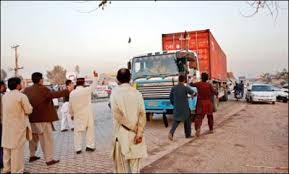
More than a week after Pakistani officials promised Defense Secretary Chuck Hagel that they would take ”immediate action” to resolve the problem, dozens of protesters are still gathering on the busy overland route, posing a security threat to convoys carrying US military equipment out of the war zone before combat ends a year from now.
US officials said Wednesday they have seen no effort by the Pakistanis to stop the protests, which prompted the US three weeks ago to halt Nato cargo shipments going through the Torkham border crossing and toward the port city of Karachi.
A Pakistani official says the government is looking for a peaceful settlement but notes that citizens have the right to protest as long as they are not violent.
The officials, speaking on condition of anonymity because they were not authorised to speak publicly about the planning, said flying the military equipment out of Afghanistan to a port will cost five to seven times as much as it does to truck it through Pakistan.
About a hundred trucks are stacked up at the border, and hundreds more are loaded and stalled in compounds, waiting to leave Afghanistan.
The shipments consist largely of military equipment that is no longer needed now that the Afghan war is ending.
Sending the cargo out through the normal Pakistan routes will cost about $5 billion through the end of next year, said a defense official.
Flying the heavy equipment, including armored vehicles, out of Afghanistan to ports in the Middle East, where it would be loaded onto ships, would cost about $6 billion if it continued through next year, said the official.
A northern supply route, which runs through Uzbekistan and up to Russia, was used for about seven months last year when Pakistan shut down the southern passages after US airstrikes accidentally killed 24 Pakistani soldiers at two border posts.
That northern route, however, was used primarily to bring shipments into Afghanistan, and is much longer, more costly and often requires cargo to be transferred from trucks to rail.
The deadlock, if not resolved, could also be costly for Pakistan.
In private meetings in Islamabad early last week, Hagel warned Pakistani leaders that unless the military shipments resumed, political support could erode in Washington for an aid program that sends them billions of dollars.
Hagel received assurances from Pakistan leaders during the meetings that they would resolve the problem, but no progress has been made.
Pentagon spokesman Adm. John Kirby said Hagel is concerned about the issue and has talked with his top commanders in the region about it. ”He knows they (the commanders) are working the issue very hard,” Kirby said.
But Marine Gen. Joseph Dunford, the top US commander in Afghanistan, was in Pakistan on Monday for a meeting with Pakistan’s new Army chief, and it wasn’t clear if he broached the issue with him.
The protesters are demonstrating against the CIA’s drone program, which has targeted and killed many terrorists but has also caused civilian casualties.
The group gathers daily at a toll booth on the outskirts of the provincial capital of Peshawar, in Pakistan’s northern Khyber Paktunkhwa province.
All traffic going into the tribal areas and on to the Torkham crossing must pass through the toll booth.
Earlier this week, a group of about 40 protesters were at the toll booth, including about 10 who were waving flags as vehicles and trucks drove past.
A makeshift enclosure was set up on the side of the road, complete with chairs arranged under a tent encircled by barbed wire to keep the protest from spilling into traffic.
A few police officers stood nearby, with orders to allow the protests to go on but ensure that no one got unruly or attacked the drivers.
”We will continue this sit-in until there is a good decision on the drones,” said Fayaz Ahmed Khalid, a political organiser with the Pakistan Tehrik-i-Insaf party.
”It’s for ourselves, for our country.” He said the group has been stopping container trucks going into Afghanistan and looking at their papers to determine whether they are carrying cargo bound for Nato troops.
If so, the protesters force the trucks to turn around.
Khalid said the group got instructions not to stop trucks coming out of Afghanistan into Pakistan, and added that they’ve also noticed there has been little traffic coming from Karachi and heading into Afghanistan.
Companies know, he said, that they will be turned back at the checkpoint. He said it has been about a week since the protesters encountered a truck carrying Nato goods.
The protesters, however, appear to be in this for the long haul — Khalid had a schedule listing who would be manning the sit-in each day through mid-January.