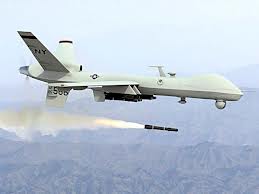
Gun Control Debate Simmers After Sandy Hook Massacre

Evacuation from Sandy Hook (Credit: tikkun.org)

WASHINGTON, Dec 17 — Democrats say meaningful action in the wake of the school shootings in Connecticut must include a ban on military-style assault weapons and a look at how the nation deals with individuals suffering from serious mental illness.

Several Democratic lawmakers and Independent Sen. Joe Lieberman said it was time to take a deeper look into the recent spate of mass shootings and what can be done to prevent them. Gun control was a hot topic in the early 1990s, when Congress enacted a 10-year ban on assault weapons. But since that ban expired in 2004, few Americans have wanted stricter laws and politicians say they don’t want to become targets of a powerful gun-rights lobby.

Gun-rights advocates said that might all change after the latest shooting that killed 20 children aged 6 or 7. Police say the gunman, Adam Lanza, was carrying an arsenal of ammunition and used a high-powered rifle similar to the military’s M-16.

On Monday, Sen. Joe Manchin, a lifelong member of the National Rifle Association, said it was time to discuss gun policy and move toward action on gun regulation. The conservative West Virginia Democrat said Monday he agrees with New York City Mayor Michael Bloomberg, who has advocated banning the sale of assault weapons.

Manchin is the most prominent gun rights advocate to speak after the shooting, telling MSNBC that he is a “proud outdoorsman and hunter, but this doesn’t make sense.”

At a Sunday night service in Newtown, Conn., the site of Friday’s massacre, President Barack Obama did not specifically address gun control. But he vowed, “In the coming weeks I’ll use whatever power this office holds to engage my fellow citizens, from law enforcement to mental health professionals to parents and educators in an effort aimed at preventing more tragedies like this.”

He added: “Are we really prepared to say that we’re powerless in the face of such carnage, that the politics are too hard? Are we prepared to say that such violence visited on our children year after year after year is somehow the price of our freedom?”

Sen. Chuck Schumer, D-N.Y., said the nation “could be at a tipping point … a tipping point where we might actually get something done” on gun control. He and other Democrats, as well as Lieberman, said they want to ban the sale of new assault weapons and make it harder for mentally ill individuals to obtain weapons. Lieberman said a new commission should be created to look at gun laws and the mental health system, as well as violence in movies and video games.

“Assault weapons were developed for the U.S. military, not commercial gun manufacturers,” Lieberman said before the Newtown vigil Sunday night.

“This is a moment to start a very serious national conversation about violence in our society, particularly about these acts of mass violence,” said the Connecticut senator, who is retiring at the end of the year.

Sen. Dianne Feinstein, D-Calif., said she will introduce legislation next year to ban new assault weapons, as well as big clips, drums and strips of more than 10 bullets.

“It can be done,” Feinstein told NBC’s “Meet the Press” of reinstating the ban despite deep opposition by the powerful National Rifle Association and similar groups.

Bloomberg said Obama could use executive powers to enforce existing gun laws, as well as throw his weight behind legislation like Feinstein’s.

“It’s time for the president, I think, to stand up and lead and tell this country what we should do – not go to Congress and say, `What do you guys want to do?'” Bloomberg said.”

Gun-rights activists had remained largely quiet on the issue since Friday’s shooting, all but one declining to appear on the Sunday talk shows.

David Gregory, the host of “Meet the Press,” said NBC invited all 31 “pro-gun” senators to appear on Sunday’s show, and all 31 declined. All eight Republicans on the Senate Judiciary Committee were unavailable or unwilling to appear on CBS’ “Face the Nation,” host Bob Schieffer said.

Rep. Louie Gohmert, R-Texas, was the sole representative of gun rights’ activists on the various Sunday talk shows. In an interview on “Fox News Sunday,” Gohmert defended the sale of assault weapons and said that the principal at Sandy Hook Elementary School, who authorities say died trying to overtake the shooter, should herself have been armed.

“I wish to God she had had an M-4 in her office, locked up so when she heard gunfire, she pulls it out and she didn’t have to lunge heroically with nothing in her hands. But she takes him (the shooter) out, takes his head off before he can kill those precious kids,” Gohmert said.

Gohmert also argued that violence is lower in cities with lax gun laws, and higher in cities with stricter laws.

“The facts are that every time guns have been allowed – conceal-carry (gun laws) have been allowed – the crime rate has gone down,” Gohmert said.

Gun-control advocates say that isn’t true. A study by the California-based Law Center to Prevent Gun Violence determined that 7 of the 10 states with the strongest gun laws – including Connecticut, Massachusetts and California – are also among the 10 states with the lowest gun death rates.

“If you look at the states with the strongest gun laws in the country, they have some of the lowest gun death rates, and some of the states with the weakest gun laws have some of the highest gun death rates,” said Brian Malte of the Brady Campaign to Prevent Gun Violence.

From Newtown, USA to the Killing Fields of Karachi

Guns & Bullets Seized in Pakistan (Credit: tribune.com.pk)

While it is normal practice for Pashtuns to bear arms, the Cold War gave them unprecedented access to the weapons that transited from Karachi to their native Khyber Pakhtunkhwa, which borders Afghanistan. It was a time when the former Soviet Union’s invasion of Afghanistan in 1979 had forced three million Afghans to cross the porous borders into Khyber Pakhtunkhwa, formerly known as the North West Frontier Province. These were Pashtun Afghans who lived on both sides of the border and who followed their relatives in Karachi to look for work.

In Karachi, the Afghan refugees had congregated in Sohrab Goth – a tented village erected by the United Nations along the remote dusty wastelands of the city’s Super Highway. In those Cold War days, I reported from the tented village after it became notorious as a drugs and weapons hotspot. The turbaned Afghan Mujahideen, who toured the camps, hunted for young recruits for the US-funded jihad against the former Soviet Union. Sohrab Goth was a home for Afghan refugees and a depot for heroin. The army’s National Logistics Cell (NLC) trucks, which carried US arms and ammunition to the Mujahideen in the north, were widely rumored to return carrying heroin to be sold in Karachi.

By December 1986, Karachi’s Pashtuns – flush with drug money – had stocked a sizeable cache of weapons in a desolate area north of Karachi called Orangi Town. The Pashtuns lived here in brick and stone homes atop the rugged cliffs, much as they did in the hilly tribal regions that border Afghanistan. Their homes jutted menacingly over a sea of Mohajirs – including almost a million Biharis who had settled here after 1971, when Pakistan’s eastern wing, “East Pakistan,” seceded and became Bangladesh.

My early recollections of Orangi Town go back to 1972, when as a schoolgirl I was brought by my father to work with humanitarian organizations in order to help the Biharis resettle in Karachi. The Bengali nationalists accused the Biharis of collaborating with the Pakistani army during the 1971 war. In fact in 1947 many Muslim Biharis had opted to migrate from India’s Bihar state to what was then East Pakistan. They ended up making a double migration in 1971 when they opted to join the Urdu speaking community in Karachi. Subsequently, 1 million Biharis were resettled in Orangi town by Zulfikar Ali Bhutto’s government.

As a teenager, I made trips with my father to the deserted area in the north of Karachi to help an exhausted paramedic serve the poor, malnourished Bihari patients. Hundreds of refugees queued outside our makeshift clinics for cough and cold medicines. As the overworked dispenser dished out the medicines that I handed to him, his fantastic claim sparked my imagination: “I’m so busy I don’t even have the time to die!”

Fifteen years later, these poor Biharis – who had left war- ravaged Bangladesh to become Karachi’s newest Mohajirs – faced the wrath of angry Pashtuns. It was mid-December in 1986 and well past our newspaper deadline when an army of Pashtuns equipped with machine guns charged down the Orangi hills. They made use of the mud walls erected on the hills, shooting and ducking for cover. As the aggressors rained fireballs from their fortresses, the Mohajir areas below them – the Aligarh and Qasbah colonies – went up in flames.

The violence continued into the wee hours as both ethnic groups displayed the worst of human nature. It was reported that Mohajir babies were snatched and thrown into burning oil while Pashtuns were tied up and sliced to pieces in revenge killings. The cycle of violence raged for the next few days and cut off Orangi from the rest of Karachi.

Late at night, as the fires raged in Orangi Town, I got a phone call from a national public radio station in the US asking for the news. I filed my report, thousands of miles from America. It filled me with awe that Orangi Town – which I knew as acres of hilly desert with mud homes and little access to clean drinking water and sewerage – had made international headlines.

It was no less amazing that Orangi had become the scene of clashes between two very different refugee groups – the Biharis from South Asia and the Afghans from Central Asia – separated by thousands of miles of territory. Their peoples had migrated to Karachi to find peace because of the wars that had uprooted them from their respective countries. And now once again their lives were being turned around by bloody ethnic warfare.

Three more anti-polio campaigners shot dead in Pakistan

Polio staff killings mourned (Credit: news.kuwaitimes.net)

Dec 19, 2012: Three more health workers vaccinating children against polio have been shot dead in Pakistan in attacks blamed on Islamic militants, bringing the total killed this week to eight.

Wednesday’s attacks all took place in the restive western frontier province of Khyber Pakhtunkhwa – one just outside the city of Peshawar and two others in the town of Charsadda. Two men and a woman have been killed.

The volunteers were taking part in a three-day government-led drive, supported by the World Health Organisation and Unicef, to vaccinate tens of millions of children at risk from polio in Pakistan.

After a decades-long struggle by multilateral organisations, governments and NGOs worldwide, the disease is now endemic only in three countries: Pakistan, Afghanistan and Nigeria.

On Tuesday, a teenage volunteer was killed in Peshawar and four others were killed in the southern city of Karachi.

It was not clear who was behind the shootings but Taliban insurgents have repeatedly denounced the anti-polio campaign as a western plot. Relatives of those shot earlier this week said several of the victims had received death threats in recent days.

Some confusion has emerged about whether and to what extent the anti-polio drive has been halted after a security meeting between officials in the hours following Tuesday’s killings.

The United Nations in Pakistan has pulled all staff involved in the campaign off the streets, Michael Coleman, a spokesman, said. However, the Pakistani government said immunisation had continued in some areas without UN support, although many workers refused to go out.

Women health workers held protests in Karachi and the capital, Islamabad. “We go out and risk our lives to save other people’s children from being permanently handicapped, for what? So that our own children become orphans?” Ambreen Bibi, a health worker, said at the Islamabad protest.

Government officials admit they have been caught off guard by the violence, saying they had not foreseen attacks in areas far from the Taliban strongholds in the north-west of the country. “We didn’t expect such attacks in Karachi,” said Mustafa Nawaz Khokhar, minister for human rights, who oversees the polio campaign.

Some Islamists and Muslim preachers in Pakistan say the polio vaccine is a western plot to sterilise Muslims to stop population growth. Other religious leaders have tried to counter that myth.

However there has been a severe backlash against immunisation for polio and other diseases in Pakistan since the CIA used a local doctor to set up a fake vaccination programme as the agency closed in on Osama bin Laden in his hiding place in the northern town of Abbottabad last year.

In July, a Ghanaian doctor was shot in Karachi, a day after leaders of factions of the Pakistani Taliban reaffirmed a ban on immunisation in the country’s restive tribal areas.

Statistics released in October showed an improvement in the polio situation in Pakistan, with 47 children paralysed in 27 districts compared with 154 in 48 districts in 2011. However, in 2005 only 28 new cases were registered.

Officials and campaigners say there is reason to be optimistic that polio can be eradicated in Pakistan if a “final push” can be made. In neighbouring India, a mass vaccination campaign involving more than a million volunteers reduced cases nationally from 741 to 42 between 2009 and 2010, and down to a single case last year.

Facebook removes Pakistani Taliban recruitment page

TTP Facebook Page (Credit: haveeru.com.mv)

SAN FRANCISCO, Dec 12 : Facebook has taken down a page used by the Pakistani Taliban to recruit new fighters, a spokesman for the US-based social network site told AFP on Wednesday.

Earlier, the US-based SITE Intelligence Group said the Umar Media TTP page used Facebook as “a recruitment” tool.

This month, 270 users clicked a link to say they “like” the page. The account appeared to have been created in September and has just a handful of messages, written in English.

“At Facebook, we have rules that bar direct statements of hate, attacks on private individuals and groups, and the promotion of terrorism,” a Facebook statement said.

“We have a large team of professional investigators both in the US and abroad who enforce these rules. Where abusive content is posted and reported, Facebook removes it and disables accounts of those responsible.

“Whenever we become aware of possible violations of our terms, we will investigate these instances and take action if violations of our Statements of Rights and Responsibilities take place.”

In Pakistan, Tehrik-i-Taliban Pakistan (TTP) spokesman Ehsanullah Ehsan told AFP this month that the faction was “temporarily” using the page “to fulfill its requirements” before launching its own website.

The TTP mainly operates in Pakistan’s tribal areas along the porous border with Afghanistan, where it has links with the better-known Afghan Taliban, and during a five-year insurgency has carried out many attacks inside Pakistan.

Last month, the TTP claimed responsibility for planting a bomb under the car of a prominent Pakistani journalist and TV anchorman, Hamid Mir.

In October, members of the group shot and wounded 15-year-old schoolgirl Malala Yousafzai in a failed bid to silence her campaign for girls’ education.


Questions Concerning the Murder of Benazir Bhutto

Benazir's Last Moments (Credit: geo.tv)

In her posthumously published book, Reconciliation, Benazir Bhutto named a man whom she believed had tried to procure bombs for an unsuccessful attempt on her life in Karachi in October 2007:

I was informed of a meeting that had taken place in Lahore where the bomb blasts were planned … a bomb maker was needed for the bombs. Enter Qari Saifullah Akhtar, a wanted terrorist who had tried to overthrow my second government. He had been extradited by the United Arab Emirates and was languishing in the Karachi central jail … The officials in Lahore had turned to Akhtar for help. His liaison with elements in the government was a radical who was asked to make the bombs and he himself asked for a fatwa making it legitimate to oblige. He got one.

Akhtar’s story reveals much about modern Pakistan. Born in 1959, he spent two years of his boyhood learning the Quran by heart and left home at the age of 18, moving to the radical Jamia Binoria madrassah in Karachi. In 1980, he went on jihad, fighting first the Soviets in Afghanistan and later the Indians in Kashmir. In both conflicts he came into contact with Pakistani intelligence agents, who were there trying to find out what was going on and to influence events. Helped by the high attrition rate among jihadis, he rose through the ranks and by the mid-1990s, after an intense power struggle with a rival commander, emerged as the leader of Harkat ul Jihad al Islami or HUJI, once described by a liberal Pakistan weekly as ‘the biggest jihadi outfit we know nothing about’.

In 1995, Akhtar committed a crime that in many countries would have earned him a death sentence: he procured a cache of weapons to be used in a coup. Putsches in Pakistan generally take the form of the army chief moving against an elected government. This one was an attempt by disaffected Islamist officers to overthrow not only Bhutto’s government but also the army leadership.

The plot’s leader was Major General Zahir ul Islam Abbasi. In 1988, as Pakistan’s military attaché in Delhi, he acquired some sensitive security documents from an Indian contact. When the Indians found out, they beat him up and expelled him. He returned to Pakistan a national hero. Seven years later, disenchanted by the secularist tendencies of both Bhutto and the army leadership, he devised a plot to storm the GHQ and impose sharia. Akhtar’s role was to supply the weapons. He travelled to the town of Dera Adam Khel near Peshawar, a well-known centre for the production and sale of cheap weapons, and bought 15 Kalashnikovs, two rocket launchers and five pistols.

He was caught red-handed moving the weapons to Rawalpindi. No doubt cajoled by his intelligence agency handlers from Afghanistan and Kashmir, Akhtar decided to give evidence against his fellow plotters. At a stroke he was transformed from a typical jihadi into a highly trusted informant; he has been playing on his supposed loyalty to the intelligence services ever since. Many of those accused of major jihadi outrages in Pakistan have at some stage been released from detention; after Akhtar had spent just five months in prison in 1995, the chief justice set him free.

It is commonplace for the Pakistani intelligence agencies to cut deals with jihadis. In Akhtar they struck gold. While most Pakistanis never escape the class into which they are born, radical Islamists enjoy considerable social mobility. He had left his Karachi seminary in 1979 with a dream of fighting jihad; by the mid-1990s he was the leader of the HUJI and had a close relationship with Mullah Omar, the Afghan Taliban leader and de facto head of state. Indeed, he was seen as one of the few people who might have been able to bridge the growing gap between the Taliban and al-Qaida. Not only that, he expanded the HUJI’s operations to Uzbekistan, Tajikistan, Burma, China and Chechnya.

Everything changed with the collapse of the Taliban regime after 9/11. According to one account, Akhtar and Mullah Omar shared the same motorbike as they fled for sanctuary with Akhtar’s old intelligence contacts in Pakistan. He told his men to keep a low profile – the US was picking up jihadis and sending them to Guantánamo – and himself headed to the UAE, a hub for Islamists as well as Western businessmen. By 2004 he had overstretched even the UAE’s relaxed hospitality. He was arrested on charges of plotting the assassination attempt on General Musharraf in December 2003 and handed over to Pakistan.

One might think that this time his luck had run out. But that would be to misapprehend the convoluted logic of what has been described as the ‘deep state’ in Pakistan. Akhtar, and others like him, were seen not as a clear and present threat, but as powerful, not very well educated men who simply needed to be pointed in the right direction. If they could be persuaded to aim their guns not at domestic targets but at the Americans in Afghanistan or at India they could still be useful.

Akhtar would enjoy another rehabilitation because of a growing row between Musharraf and the Supreme Court. In early 2007, the court, seeking a popular issue with which it could undermine Musharraf, started inquiring about the many prisoners being held without charge. On 5 May 2007, it was told that Akhtar was not in government custody. His relatives insisted he was. Three weeks later, the government quietly released him and told the court, in the words of a National Crisis Management Cell report, that he was ‘engaged in jihadi activities somewhere in Punjab’.

Why had the Pakistani authorities held Akhtar for so long only to release him? In part in the hope of bending him to their will. But also because he knew too much about the true nature of the deep state’s relationship with radical Islamists. His lawyer, Hashmat Habib, told the Supreme Court that intelligence officials had explained to Akhtar that had he not been detained there was a strong possibility he would have ended up being interrogated by the FBI.

The publication of Reconciliation left the authorities little choice but to detain Akhtar yet again, but in June 2008, after three months of half-hearted questioning, he was released without charge. He went straight back to fighting jihad according to his own rules rather than those suggested by his intelligence handlers. Later that year, he was accused by the Pakistani press of being involved in the bombing of the Marriott Hotel in Islamabad and in 2009 was named as the key contact of five American jihadis who travelled to Pakistan with the idea of attacking a nuclear power plant. But still the ISI kept faith. In August 2010, after he was reportedly injured in a drone attack, he was taken into protective custody, given treatment in Peshawar, moved to Lahore and freed. The man formally responsible for his release, the Punjab home minister, Rana Sanaullah, told reporters in Lahore that Akhtar ‘cannot be termed a terrorist’.

Akhtar’s case is by no means unique. In a conversation with Amir Mir, a Pakistani journalist who has since tried to investigate Bhutto’s murder, Bhutto claimed that Akhtar had instructed one of his HUJI underlings, Abdul Rehman Sindhi, to organise certain aspects of the Karachi attack.[*] Like Akhtar, Sindhi had been held by the authorities for militant activity but was released without explanation. In 2012, the UN named him as an al-Qaida facilitator. We can only assume that Bhutto was given the names of Akhtar and Sindhi by a sympathiser in the deep state; their role in her death has not been established. But it is clear the state wants Akhtar’s secrets to remain secret. Despairing of Pakistan’s decline into lawlessness, the intelligence agencies cling to the hope that Islam will provide some answers. More practically, they also point to their success in controlling some militant groups, including the largest of them, Lashkar-e-Taiba, the ISI’s model of how a militant group should behave – attacking Indian forces in Kashmir, Delhi and Mumbai but causing no trouble at home. Like Akhtar, the Lashkar-e-Taiba leader Hafiz Saeed is a man often detained and often released.

Although generally feared as one of the most powerful institutions in the country, the ISI feels itself to be weak: militants have attacked its personnel with impunity. Significant amounts of Pakistani territory are now either controlled or fiercely contested by militant groups in the North-West. The army has tried military solutions but they have cost thousands of soldiers’ lives and met with only limited success. How much easier to have a word with friends from the good old days of the anti-Soviet and Kashmir struggles in an attempt to persuade them to unify their forces and to keep them under control. Even if it won’t work in the long term it does occasionally bring temporary relief – the ceasefires that were briefly established in the Swat Valley are an example.

On 27 December 2007, with ten days to go until parliamentary elections, Benazir Bhutto addressed more than ten thousand supporters in Liaquat Park, Rawalpindi. She told them democracy was returning to Pakistan. ‘Long live Bhutto!’ they roared back. ‘Benazir, Prime Minister!’ The speech over, she moved to an armour-plated Toyota Land Cruiser built to her specifications in the UAE. Its roof had an escape hatch that, much to the annoyance of her security advisers, Bhutto used for waving to her followers. As the Toyota pulled away from Liaquat Park her supporters surrounded it. ‘I should stand up,’ Bhutto said, clambering up as one of her fellow passengers pulled the mechanism that opened the hatch. She stood on the back seat, her head and shoulders sticking out above the Toyota’s roof.

There were so many people by now that the car was almost at a standstill. Two of Bhutto’s guards climbed onto the rear bumper while others went to the front and the sides. But an assassin was waiting and saw his chance. Wearing a dark jacket and sunglasses, a Pashtun called Bilal, who also went by the alias Saeed, first made his way towards the front of the car. Then he moved to the side, where there were fewer people. He took out a black automatic and pointed it at Bhutto’s head. One of the guards clawed at the young man’s arm but was too far away to get a firm grip. Bilal fired three shots in less than a second. If you search for ‘new angle of Bhutto assassination’ on YouTube you can see what happened. As the second shot rang out Bhutto’s headscarf or dupatta moved away from her face. She then fell like a stone, through the escape hatch, into the vehicle. But the gunman wasn’t finished. He looked down at the ground, prepared himself for death, and set off his suicide bomb. Much of the press reported him as clean-shaven. In fact, he had probably never shaved at all. British scientists who later analysed what was left of his body estimated his age at 15 and a half.

Pakistan’s suicide bomb factories, located in the tribal areas, rely on child recruits for a practical reason: they are more impressionable. Recruits for suicide attacks are given immaculate white clothes, copious amounts of food, above average accommodation and hours of gently imparted one on one indoctrination. The other students are forbidden to talk to them and are instructed instead to bow with respect every time a recruit walks by. With such a regime it can take a few months to persuade an 18-year-old young man to mount a suicide attack; but a 15-year-old can be persuaded to do it in six weeks.

Liaquat Park was named after the first prime minister of Pakistan, Liaquat Ali Khan, who was assassinated there in 1951. In what many believe was a cover-up, the police shot his killer on the spot. One of the doctors who tried to revive him at Rawalpindi General Hospital was a certain Dr Khan. Fifty-six years later, Dr Khan’s son Mussadiq was one of the doctors trying to revive Benazir Bhutto at the same hospital. He was equally unsuccessful. On the announcement of her death, the vast majority of Pakistanis assumed that the people who ordered her assassination were senior state officials and that they would never be identified.

There are, broadly speaking, two views about what happened that day. Bhutto’s supporters maintain she was shot and that there were multiple attackers. The Pakistani authorities say the explosion knocked her head against the lever of the escape hatch. Bhutto’s supporters want to establish that there was a sophisticated, officially sponsored conspiracy; the state prefers the idea of a crude but unpreventable attack by Islamic militants.

Certainly, when Bhutto died, there were shots followed by an explosion. The pictures suggest that a bullet hit her and that she fell into the vehicle before the bomb went off. It wasn’t just that her headscarf moved after the second shot. Her movements weren’t consistent with someone ducking a bullet: it looks as if she was already dead, or at least seriously injured, when she fell. The doctors who tried to revive her failed to resolve the issue. They have given various accounts but their evidence is of limited use because they didn’t perform a proper autopsy. There were questions and conspiracy theories about the lack of a post-mortem, but the issue subsided in political terms when her husband, Asif Zardari, was offered one, but said it wouldn’t be necessary.

Under pressure because so many people assumed he had ordered the murder, Musharraf asked Scotland Yard to assist the investigators, though he restricted the terms of reference to the ‘cause and circumstances of Ms Bhutto’s death’, frustrating any hope that the British police would try to identify who was responsible. In 2008, Scotland Yard published an executive summary of its findings which backed the government’s view, failing even to discuss the mobile-phone images that suggested she had been shot. Few believed it. The full report has never been published; there it is explained that a senior radiologist from Addenbrooke’s Hospital in Cambridge who was shown the X-rays of Bhutto’s skull concluded that the explosion had forced her head down onto the escape hatch mechanism. In fact, although the precise cause of Bhutto’s death remains one of the most strongly contested issues in the case, it is largely irrelevant. The important questions are: who was the child-assassin and who persuaded him to do it?

Some of the YouTube films of the Rawalpindi rally (look for ‘Shahenshah Bhutto’) point to another controversy. While Bhutto was speaking at the rally her chief bodyguard, Khalid Shahenshah, can be seen a few feet away running his fingers along his neck while raising his eyes towards her. In July 2008, after much internet speculation about these decidedly strange movements, Shahenshah was murdered outside his home in Karachi. His conduct and his death have never been explained.

Bhutto was participating in the election campaign only because of a deal she had struck with Musharraf. It was always an awkward arrangement. Bhutto saw Musharraf as the latest incarnation of the military that had hanged her father, Zulfikar Ali Bhutto. Musharraf, for his part, saw Bhutto as a child of privilege who went on corruptly to enrich herself. After his coup in 1999, Musharraf had declared that no longer would the country’s richest families and biggest landowners be able to dominate politics. And Bhutto, he declared, would never hold power again.

The general may have led a coup against a democratically elected government but his message resonated throughout Pakistan. The good mood didn’t last, however. As each month passed, his popularity drained away and his ambitions shrank. By 2007, eight years after his coup, he was older, wiser and politically weaker. Like many Pakistanis, he had no doubt that the corruption allegations against Bhutto and Zardari were valid. But in 2007 he also had to accept that Bhutto had a rock solid popular base and that if he wanted to remain in power he needed her support. Swallowing his pride, he agreed to an MI6 suggestion that he attend a secret meeting with Bhutto in Abu Dhabi in July 2007. The encounter kicked off a series of meetings which, as they became more serious and focused, were taken over by the CIA. The basic proposition was simple enough: if Musharraf dropped all the corruption charges against Bhutto and Zardari and allowed her to return from exile to contest elections, she would not oppose his remaining president. To the Americans it looked like a dream ticket: military muscle combined with democratic legitimacy. It could never have worked. ‘I don’t believe in trust,’ Bhutto said at the time. ‘People just have interests that sometimes coincide.’ Nevertheless, the deal was done and she returned to Pakistan, flying from Dubai to Karachi on 18 October 2007. She was greeted by a triumph on an imperial Roman scale. There comes a point when a crowd is so big it’s impossible to count it. Many reckon that more than a million Pakistanis were there to welcome her home.

For eight hours she progressed in a massive, armour-plated truck from Karachi’s International Airport to the mausoleum of Pakistan’s founder, Muhammad Ali Jinnah, where she was due to give a speech. She stood on a deck on the top of the truck acknowledging the cheers of the crowds lining the road. The police deployed no fewer than nine thousand men to protect her but even so Zardari wasn’t satisfied. He organised a human shield consisting of more than two thousand volunteers known as the Jaan Nisarane Benazir, those willing to die for Benazir. Many were Zardari’s former jail mates; they surrounded her vehicle and kept pace with the procession.

After several hours standing on the truck, Bhutto’s ankles were swelling and she decided to sit down for a few minutes. She made her way down some steps to a secure cubicle located behind the driver’s seat. It was then the attack began: two bombs went off in rapid succession. The first killed, among others, three policemen and opened up a path through which the second bomber was able to move. The attack left 149 people dead and 402 wounded. But it missed its mark. As rescuers worked by the light of the flames, dragging bodies from the twisted wreckage, Bhutto stepped out of the vehicle without a scratch.

As soon as the smoke had cleared people were asking whether the first bomb had been remote-controlled. The issue was significant because the police had supposedly provided the convoy with two jammers to block any radio signals intended to detonate a bomb. Activists from Bhutto’s party claimed the jammers either hadn’t been provided or had been switched off. Both the Karachi and Rawalpindi attacks were investigated by Joint Investigation Teams (JITs) that brought together various police departments. The JIT report into the Karachi attack concedes that the Turkish-made jammers were not functioning at the time of the attack. According to a Sindh Special Branch memo, they failed because their batteries had been drained over the long course of the procession. It was a moot point. Perhaps anticipating that jammers would be deployed, the bombers had anyway decided against remote detonation: it was a double suicide attack.

Pakistan lacks skilled forensic pathologists but there have been so many suicide attacks now that even the most junior policeman knows that the first thing to look for is the ‘facemask’. For some reason, related to the way the shockwave moves from the bomb-laden waistcoat, the bombers’ faces – though very little of the head behind them – often survive intact. On this occasion, the JIT report states, one facemask was found 26.6 feet away from the point of detonation and another 78 feet away. To whom did they belong?

The Pakistani police rarely know whether their political masters want an investigation to be thorough or not. As a general rule they assume the politicians are hoping for a cover-up and actively investigate only when specifically ordered to do so. That would explain why the JIT Karachi report is such a remarkably poor piece of work: 138 pages long, it contains virtually no useful facts and plenty of contradictions. Page after page of police reporting from the scene establishes only that some vehicles were destroyed and that a lot of body parts were strewn about. Some of these were gathered and sent to the morgue while others (no explanation isgiven as to why) went to a DNA specialist, who concluded that the parts he had were from different people. The finding had no discernible significance. Basic, easily discoverable facts were not gathered. The various police documents give the time gap between the first and second explosions as between 30 and 50 seconds (Inspector General of the CID); under a minute (the Federal Investigation Agency); one minute exactly (an army explosives expert); and between one and two minutes (the bomb disposal unit travelling with the convoy). Some of the documents in the JIT report – presumably those from the intelligence agencies – are unattributed. Others, such as doctors’ handwritten notes on the death of a few, apparently randomly selected victims, are irrelevant. Indeed, the whole report has only two findings of any significance.

The first concerns the devices called ‘strikers’ that most suicide bombers in Pakistan rely on to detonate their explosives. Although its lot number was illegible, the striker sleeve found at the epicentre of the Karachi blast was marked MUV-2. The suicide attack in Karachi was the 28th to occur in Pakistan in 2007. MUV-2 striker sleeves had been used on 11 of those occasions, including bombings in Quetta, Rawalpindi, Peshawar and other smaller cities in North-West Pakistan. The targets in these 11 cases were all consistent with the Taliban having been responsible and included the police, politicians who had opposed jihadis and the Frontier Corps, which had done much of the fighting against the Taliban.

The second interesting entry was a summary of the interrogation of the man Bhutto had named, Qari Saifullah Akhtar. But the document had been doctored. After describing his childhood and his long jihadi career, the story came to an abrupt end in August 2007. It resumed in January 2008, after Bhutto’s murder had been carried out. It was a clumsy effort: the edited page is in one font, the rest of the document in another.

The JIT may have provided few answers, but it did inadvertently hint at the reason some in the deep state were so anxious about Bhutto. The report includes newspaper articles providing possible motivations for an attack on Bhutto. One quotes her as saying that if the US identified the whereabouts of Osama bin Laden on Pakistan soil she would consider co-operating with Washington in having him detained. That in itself might have provided enough motive for an attack. But there was something else. As part of her effort to win American support, Bhutto said that she would be willing to hand over the Pakistani nuclear scientist A.Q. Khan for questioning by the IAEA. At the time, Khan had accepted personal responsibility for the export of nuclear technology to Iran, North Korea and Libya, although his live TV confession of his activities was always considered suspect by the IAEA and the US, both of which believed that no single individual could have exported planeloads of nuclear material without the army’s knowledge. To this date, the military, despite insistent requests, has refused to allow foreigners to talk to Khan. Bhutto’s offer to the IAEA was seen as a real threat to Pakistan’s nuclear status.


Despite their apparent lack of interest in the failed assassination attempt, the Karachi police did eventually arrest someone. In June 2010, they raided the home of Azmatullah Mehsud, seized a pistol and accused him and his brother Abdul Wahab Mehsud (who remained at large) of involvement in the attack. As so often, the motivation of the police was unclear. It seemed Azmatullah had been arrested not so much as a result of the Bhutto case but because the police thought he was going to attack one of their own officers. The senior superintendent of the Karachi CID, Umar Shahid, told a local paper: ‘We have recorded his telephonic conversation with his brother, who directed him to attack me.’

The police have leaked a few snippets of information about Azmatullah to the press. They have said he raised funds for the Taliban and provided hideouts and medical treatment to injured militants. They also said he had links to Baitullah Mehsud, the leader of the Pakistani Taliban, and the very violent anti-Shia group Lashkar-e-Jhangvi. Azmatullah was released the next month. But if some elements of the state wanted him free, others did not. A day later, a Sindh police anti-extremism cell re-arrested him. ‘Due to a shortage of evidence, the courts released several suspects on bail but he has been detained for further investigation,’ a police official said. His current whereabouts are not known.

The JIT report on the assassination, at under forty pages including all annexes, is slightly more conscientious than the Karachi document, though hardly what you would expect of the definitive police record on such a major crime. It did at least try to identify some culprits. The report relied on two types of evidence: confessions of arrested suspects and phone intercepts. The first breakthrough came a month after Bhutto’s death, when police in the city of Dera Ismail Khan arrested a 15-year-old boy, Aitzaz Shah, suspected of planning an attack on a Shia procession there. Shah had run away from the Jamia Binoria madrassah, where he had been placed for free religious education, and made his way to Waziristan, on the border with Afghanistan, with the idea of joining the Taliban. In his confession, he said that he had been taught how to drive and persuaded to carry out a suicide attack, and was told by his trainers in October 2007 that his target would be Benazir Bhutto. He said he had met Baitullah Mehsud four times. His confession led to other arrests and helped the police put together a picture of how Bilal alias Saeed came to be in a position to kill Bhutto.

Originally from South Waziristan, Bilal’s father was a labourer in Karachi, who later said his son had left home and not been in touch for a year. One of Bilal’s accomplices, Ikram Ullah, who was near him at the time of the attack, walked away from the crime scene unscathed and his whereabouts have never been established. There were three others in Rawalpindi that day. Husnain Gul was a madrassah student who in 2005 had received small-arms training at a camp in North-West Pakistan. The JIT report says that when he was arrested he had a hand grenade and clothes belonging to Bilal. In his confession, Gul described how a friend of his had been killed when Musharraf ordered an assault on the Red Mosque in Islamabad in July 2007. The attack on the jihadis who had seized the mosque was a turning point in modern Pakistani history, persuading many Islamists that the Pakistani state was not their friend but an enemy that must be attacked. Gul decided to avenge his friend’s death and persuaded his cousin, Muhammad Rafaqat, to join him.

In 2007, the pair travelled to Waziristan in the hope of finding a militant outfit to work for. They told the police it was there that they were instructed to join the group trying to kill Bhutto. Gul had actually tried to assassinate her once before at an earlier election rally in Peshawar but was thwarted by the tight security. Together with Rafaqat he then travelled to Rawalpindi. Gul carried out a recce of Liaquat Park, then went to the bus station to meet the two designated suicide bombers, Bilal and Ikram Ullah. They had travelled with a third person, Nasrullah alias Ahmed. The morning Bhutto was due to give her speech, Rafaqat and Nasrullah took another look at Liaquat Park while Gul gave Bilal and Ikram Ullah suicide jackets, pistols, ammunition and hand grenades. The plan was simple. Bilal would stand by the exit gate and try to kill Bhutto. If he failed, Ikram Ullah would try to kill her instead.

The confessions repeatedly referred to two others as having played a leading role in the plot, one of whom, Nadir Khan, otherwise known as Qari Ismail, had been given money by Baitullah Mehsud to cover the costs. His arrest would have provided the police with a vital link to the Taliban leader. But the JIT report contains a memo which states that on 15 January 2008, just 19 days after the assassination, Nasrullah and Nadir Khan had been in a car approaching a checkpoint in the Mohmand tribal agency in North-West Pakistan. For some reason not stated in the memo the two men are said to have run away from the car. Security personnel killed both of them.

For Pakistanis it is a familiar story. The euphemism ‘encounter’ is used to refer to the phenomenon of crime suspects’ being killed as they try to flee checkpoints: the understanding is that the authorities, when they want someone dead, stage a clash in which the victims are said to have been shot while trying to escape.

Although the deaths of Nasrullah and Nadir Khan left the trail conveniently cold, the confessions of their colleagues gave a hint as to how the plot had been organised. The suspects repeatedly mentioned a particular madrassah, the Darul Uloom Haqqania, located at Akora Khattak on the road from Islamabad to Peshawar. Gul first met Nasrullah there; Nadir lived there; and it was at the madrassah that the team of assassins was briefed. The accounts even included details such as in which rooms key planning meetings had taken place.

The Darul Uloom Haqqania is run by the 75-year-old former Pakistani senator, Sami ul Haq: a man generally referred to either as Father of the Taliban or as Mullah Sandwich. In 1990, when an Islamabad brothel owner, Madam Tahira, had her business broken up by the authorities, she took revenge by naming some of her clients. One of her more memorable claims was that the pious Senator Haq, who has repeatedly demanded the introduction of sharia law, particularly enjoyed the company of two women at once, one below and the other above. Ever afterwards, the senator couldn’t make a speech in parliament without his liberal detractors heckling with cries of ‘Sandwich!’

The maulana would doubtless rather be known for his role in founding the Taliban, much of whose leadership was educated at the Darul Uloom Haqqania, the only educational establishment to have awarded Mullah Omar an honorary degree. Whenever the Taliban suffered setbacks in its military campaign to take over Afghanistan in the late 1990s, it only had to ask Sami ul Haq for help and he would close the madrassah and tell his students to go and fight instead. On the one occasion I visited, an Afghan Taliban official (they were still in power at the time) was there too and Sami ul Haq explained that he was a former student turned Taliban minister who had returned for a refresher course.

Like Akhtar, Sami ul Haq has long had a cosy relationship with the Pakistani state. Of the 12 people so far named by the authorities as part of the plot to kill Bhutto, he now accepts that four had been his students. All this strongly suggests Taliban involvement. But the state believed it had harder evidence too. Shortly after Bhutto’s death, the government put online what it claimed was a phone conversation, secretly recorded hours after the assassination, between an unidentified mullah and Baitullah Mehsud. This is the transcript of the tape.

Mullah: Asalaam Aleikum.

Baitullah Mehsud: Waaleikum Asalaam.

M: Chief, how are you?

BM: I am fine.

M: Congratulations, I just got back during the night.

BM: Congratulations to you, were they our men?

M: Yes they were ours.

BM: Who were they?

M: There was Saeed; there was Bilal from Badar and Ikramullah.

BM: The three of them did it?

M: Ikramullah and Bilal did it.

BM: Then congratulations.

M: Where are you? I want to meet you.

BM: I am at Makeen [a town in the south Waziristan tribal area], come over, I am at Anwar Shah’s house.

M: OK, I’ll come.

BM: Don’t inform their house for the time being.

M: OK.

BM: It was a tremendous effort. They were really brave boys who killed her.

M: Mashallah. When I come I will give you all the details.

BM: I will wait for you. Congratulations, once again congratulations.

M: Congratulations to you.

BM: Anything I can do for you?

M: Thank you very much.

BM: Asalaam Aleikum.

M: Waaleikum Asalaam.

People who had met and spoken with Baitullah Mehsud confirmed that the voice on the tape was his. The fact that Bhutto’s name is not mentioned has led some to believe it’s a fake, but if the Pakistan intelligence agencies were trying to frame Baitullah Mehsud they would surely have made sure his name was mentioned on the tape.

There is one further reason for suspecting Taliban involvement in the murder. In February 2008 the Pakistani ambassador to Afghanistan was kidnapped in the Khyber tribal agency. The Taliban militants holding him had one demand: the release of Aitzaz Shah, Husnain Gul and Muhammad Rafaqat.

The outpouring of sympathy that followed Bhutto’s murder propelled Zardari to power. Privately, many of Bhutto’s friends were unhappy that the man who they believed had corrupted Bhutto had secured the presidency. But they had one consolation: guided by his Sindhi honour code, which sets a high value on revenge, and with the full power of the state at his disposal, Zardari would be able to bring her killers to justice. The assassinations of Liaquat Ali Khan and President Zia ul Haq had never been solved. This time it would be different. But it wasn’t. Zardari failed to make any significant progress in the investigation. Privately, he said that the murder was part of history, another chapter in the Bhutto family story: Benazir had played her sacrificial role and there was no point in looking back. Publicly, he argued that any Pakistani investigation would lack credibility so the UN should do it instead. Yet the UN’s limited terms of reference (they were to carry out a fact-finding not a criminal inquiry) and history of political caution suggested it would be unlikely to solve the case. Furthermore, the UN was blocked. In its published report it described as mystifying ‘the efforts of certain Pakistani government authorities to obstruct access to military and intelligence sources’.


The first sign that the state would not be making any effort to establish the facts came within two hours of the assassination, when fire engines were called in to wash down the crime scene. The deputy inspector general of the Rawalpindi police, Saud Aziz, who ordered the clean-up, has claimed police officers at the bomb scene told him the atmosphere had became so hysterical that her supporters were daubing themselves in Bhutto’s blood. Fearing a total breakdown of law and order, he called in high-pressure hoses. Anyone familiar with Pakistan’s political realities will find this account unconvincing. No mid-ranking or even senior police offer would take such a decision on his own initiative. It came as no surprise that two anonymous sources told the UN inquiry that Saud Aziz received a call from a senior army officer ordering him to wash down the crime scene. The car in which Bhutto died was also cleaned even though the police had secured it.

Also suspicious is the failure to make progress with the trials of the low-level operatives who have been arrested. It took a year even to charge Aitzaz Shah. Every time the court meets there is a new reason for postponement. Excuses have ranged from the unavailability of judges to the possible future availability of new evidence. The intelligence agencies have been just as inactive. While the ISI is Pakistan’s best-known spy agency, there are many others, including the 100,000-strong Intelligence Bureau or IB. In early 2008, the IB, which had a new leadership appointed by Zardari, asked the Interior Ministry to pass on any material it had about the assassination. The IB thought they were pushing on an open door: after all, the new minister of the interior, Rehman Malik, had been Bhutto’s closest confidant during the years of exile. But Malik decreed that the files should not be handed over.

Malik’s behaviour has been mysterious in other respects too. When Bhutto left the Liaquat Park rally, Malik’s bullet-proof black Mercedes was the designated back-up car in the event that Bhutto needed to be evacuated. Despite having overall responsibility for her security (something he has subsequently tried to deny), Malik reacted to the explosion by ordering his driver to leave the area and head for Islamabad. Once he got there (a 25-minute drive) he started a series of TV interviews in which he gave contradictory accounts of how he had reacted to the attack and why. His version changed from ‘I was about four feet away and I turned around and Mohtarma’s [Bhutto’s] car was trying to get out and we led that car and got away and went to the hospital and I was present in the hospital’ to ‘when the bomb blast happened there was a distance of no more than eight feet between my car and Mohtarma’s car. So I said let’s head towards Islamabad – in the meantime we called the hospital.’ His decision to flee the scene has never been explained.

Before her murder, Bhutto had written a number of emails naming people whom she believed wanted to kill her. Seemingly anticipating the story that would be constructed after her death, she said she wanted to make it clear that if she were killed the blame should be ascribed not to the Taliban or al-Qaida but to her enemies in the Pakistani establishment. And in a letter to Musharraf she accused three men: a senior opposition politician, a former head of the ISI known for his Islamist views, and the IB chief at the time of the assassination, Ejaz Shah, who had jihadi links. Omar Sheikh, the man accused of murdering the Wall Street Journal reporter Daniel Pearl, is said to have fled to Shah’s house when he was on the run; for a ‘missing week’ Shah let Sheikh stay hidden away. Eventually, though, the case took on such a high profile that Shah was forced to arrange Sheikh’s surrender. There have been claims in the Pakistani press that Shah also had a connection with Akhtar. Neither of the police investigations dared ask questions of Shah or the others Bhutto named. All have publicly denied her accusations.

And yet despite all this conspicuous inactivity, in February 2011, more than three years after the murder, the government announced it had a new suspect. General Musharraf would be charged with her murder. So what new evidence had been uncovered? None at all. Citing ‘motive’ and ‘circumstantial evidence’ the charge sheet stated: ‘It is prima facie established that Musharraf is equally responsible with criminal “mens rea” for facilitation and abetment of assassinating Benazir Bhutto through his government’s unjustified failure in providing her with the requisite security protection her status deserved as twice prime minister.’

Although the charges made international headlines, few in Pakistan paid any attention. While it has long been accepted that Musharraf failed to give Bhutto adequate protection, the timing of the charges told its own story. They came just as he was trying to revive his political career by returning from a self-imposed exile in the UK to start a new political party in Pakistan. And it worked: he cancelled his plans.

In the weeks before her assassination, Bhutto had every reason to believe she would be killed. The failed attempt in Karachi made it clear that the jihadi leadership was willing and able to deploy its most powerful weapon – suicide bombers – against her. I and a couple of other journalists met her a few hours after that attack: the conversation was maudlin and filled with the thought that she couldn’t go on being so lucky. She fully understood her situation but accepted it. Partly she seemed to consider it a matter of fate, but perhaps she was also trying to atone for her sins. Her Swiss bank accounts were filled with millions of dollars of ill-gotten gains made during her two governments.

As for Zardari, he has said that the Taliban murdered his wife but that he is not sure who commissioned them. It’s a reasonable conclusion. But his attitude leaves many questions unanswered. Why did he allow the investigation to be blocked? Why has he not pressed his interior minister to clear up the obvious inconsistencies in his account? Why has he not objected to Akhtar’s release? And why hasn’t he moved against Sami ul Haq’s madrassah, where the murder was planned? That there are no answers to these questions doesn’t necessarily implicate Zardari any more than the clear evidence that the investigation was deliberately frustrated does. He may well fear suffering the same fate as his wife. But it does mean that there isn’t the slightest reason to believe that the people who tasked the Taliban with Bhutto’s murder will ever face justice.

Day of Suicide Attacks Heightens Fears Across Pakistan

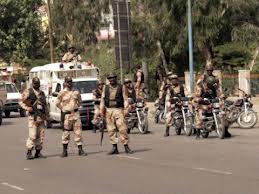
Moharram patrols (Credit: nation.com.pk)

ISLAMABAD, Nov 21 — A series of suicide bomb attacks on Pakistani Shiites as they observed a major religious holiday killed at least 26 people and wounded dozens on Wednesday, heightening fears of further bloodshed in the coming days.

Shiites are observing the Mourning of Muharram, a 10-day period in which lengthy processions wind through major urban centers and that culminates on Sunday.

Despite efforts to step up security, including switching off cellphone networks for hours at a time, the government has been unable to prevent Sunni extremist militants from reaching their targets.

The deadliest attack occurred close to midnight in Rawalpindi, home to the military’s headquarters, when a blast ripped through a religious procession headed toward a mosque in the city center. Witnesses told local television stations that a suicide attacker had flung a grenade into the crowd before detonating explosives strapped to his body. News media reports, citing the police, said at least 23 people had been killed and 47 had been wounded.

Hours earlier, two blasts in the port city of Karachi killed at least three people and wounded at least 17. A suicide bomber riding a motorcycle rammed into a rickshaw, setting off an explosion that killed two people and wounded several others. Moments later a second blast at the same location killed another person and wounded about 10, including journalists who had rushed to the scene of the first blast.

Sectarian violence in Pakistan has acquired a deadly momentum over the past year with attacks on minority Shiites across the country, from passes in the northern mountains to the tribal belt along the Afghan border and major cities including Karachi and Quetta.

The attacks are mostly by sectarian groups, like Lashkar-e-Jhangvi, that also have ties to the Taliban, Al Qaeda and other Sunni extremist militant organizations.

The violence coincided with Pakistan’s hosting of the Developing Eight summit meeting, an international gathering intended to promote trade and investment that brings together Bangladesh, Egypt, Indonesia, Iran, Malaysia, Nigeria, Pakistan and Turkey.

Thousands of extra police and security forces have been drafted into the capital, Islamabad, where the summit meeting is to start on Thursday. Among the leaders expected to attend are President Mahmoud Ahmadinejad of Iran, President Mohamed Morsi of Egypt and Prime Minister Recep Tayyip Erdogan of Turkey.

Other violence in Pakistan on Wednesday further underscored the precarious security situation. A bomb in Quetta, the capital of Baluchistan, exploded near a security vehicle escorting children to school, killing three soldiers and two passers-by. People suspected of being Islamist militants shot and killed four policemen near the town of Bannu, on the edge of the tribal belt.


Washington Develops Matrix to Nab Terror Suspects

Washington, Oct 23: Over the past two years, the Obama administration has been secretly developing a new blueprint for pursuing terrorists, a next-generation targeting list called the “disposition matrix.”

The matrix contains the names of terrorism suspects arrayed against an accounting of the resources being marshaled to track them down, including sealed indictments and clandestine operations. U.S. officials said the database is designed to go beyond existing kill lists, mapping plans for the “disposition” of suspects beyond the reach of American drones.

Although the matrix is a work in progress, the effort to create it reflects a reality setting in among the nation’s counterterrorism ranks: The United States’ conventional wars are winding down, but the government expects to continue adding names to kill or capture lists for years.

Among senior Obama administration officials, there is a broad consensus that such operations are likely to be extended at least another decade. Given the way al-Qaeda continues to metastasize, some officials said no clear end is in sight.

“We can’t possibly kill everyone who wants to harm us,” a senior administration official said. “It’s a necessary part of what we do. . . . We’re not going to wind up in 10 years in a world of everybody holding hands and saying, ‘We love America.’ ”

That timeline suggests that the United States has reached only the midpoint of what was once known as the global war on terrorism. Targeting lists that were regarded as finite emergency measures after the attacks of Sept. 11, 2001, are now fixtures of the national security apparatus. The rosters expand and contract with the pace of drone strikes but never go to zero.

Meanwhile, a significant milestone looms: The number of militants and civilians killed in the drone campaign over the past 10 years will soon exceed 3,000 by certain estimates, surpassing the number of people al-Qaeda killed in the Sept. 11 attacks.

The Obama administration has touted its successes against the terrorist network, including the death of Osama bin Laden, as signature achievements that argue for President Obama’s reelection. The administration has taken tentative steps toward greater transparency, formally acknowledging for the first time the United States’ use of armed drones.

Less visible is the extent to which Obama has institutionalized the highly classified practice of targeted killing, transforming ad-hoc elements into a counterterrorism infrastructure capable of sustaining a seemingly permanent war. Spokesmen for the White House, the National Counterterrorism Center, the CIA and other agencies declined to comment on the matrix or other counterterrorism programs.

Privately, officials acknowledge that the development of the matrix is part of a series of moves, in Washington and overseas, to embed counterterrorism tools into U.S. policy for the long haul.

White House counterterrorism adviser John O. Brennan is seeking to codify the administration’s approach to generating capture/kill lists, part of a broader effort to guide future administrations through the counterterrorism processes that Obama has embraced.

CIA Director David H. Petraeus is pushing for an expansion of the agency’s fleet of armed drones, U.S. officials said. The proposal, which would need White House approval, reflects the agency’s transformation into a paramilitary force, and makes clear that it does not intend to dismantle its drone program and return to its pre-Sept. 11 focus on gathering intelligence.

The U.S. Joint Special Operations Command, which carried out the raid that killed bin Laden, has moved commando teams into suspected terrorist hotbeds in Africa. A rugged U.S. outpost in Djibouti has been transformed into a launching pad for counterterrorism operations across the Horn of Africa and the Middle East.

JSOC also has established a secret targeting center across the Potomac River from Washington, current and former U.S. officials said. The elite command’s targeting cells have traditionally been located near the front lines of its missions, including in Iraq and Afghanistan. But JSOC created a “national capital region” task force that is a 15-minute commute from the White House so it could be more directly involved in deliberations about al-Qaeda lists.

The developments were described by current and former officials from the White House and the Pentagon, as well as intelligence and counterterrorism agencies. Most spoke on the condition of anonymity because of the sensitivity of the subject.

These counterterrorism components have been affixed to a legal foundation for targeted killing that the Obama administration has discussed more openly over the past year. In a series of speeches, administration officials have cited legal bases, including the congressional authorization to use military force granted after the Sept. 11 attacks, as well as the nation’s right to defend itself.

Critics contend that those justifications have become more tenuous as the drone campaign has expanded far beyond the core group of al-Qaeda operatives behind the strikes on New York and Washington. Critics note that the administration still doesn’t confirm the CIA’s involvement or the identities of those who are killed. Certain strikes are now under legal challenge, including the killings last year in Yemen of U.S.-born al-Qaeda operative Anwar al-Awlaki and his 16-year-old son.

Counterterrorism experts said the reliance on targeted killing is self-perpetuating, yielding undeniable short-term results that may obscure long-term costs.

“The problem with the drone is it’s like your lawn mower,” said Bruce Riedel, a former CIA analyst and Obama counterterrorism adviser. “You’ve got to mow the lawn all the time. The minute you stop mowing, the grass is going to grow back.”

An evolving database

The United States now operates multiple drone programs, including acknowledged U.S. military patrols over conflict zones in Afghanistan and Libya, and classified CIA surveillance flights over Iran.

Strikes against al-Qaeda, however, are carried out under secret lethal programs involving the CIA and JSOC. The matrix was developed by the NCTC, under former director Michael Leiter, to augment those organizations’ separate but overlapping kill lists, officials said.

The result is a single, continually evolving database in which biographies, locations, known associates and affiliated organizations are all catalogued. So are strategies for taking targets down, including extradition requests, capture operations and drone patrols.

Obama’s decision to shutter the CIA’s secret prisons ended a program that had become a source of international scorn, but it also complicated the pursuit of terrorists. Unless a suspect surfaced in the sights of a drone in Pakistan or Yemen, the United States had to scramble to figure out what to do.

“We had a disposition problem,” said a former U.S. counterterrorism official involved in developing the matrix.

The database is meant to map out contingencies, creating an operational menu that spells out each agency’s role in case a suspect surfaces in an unexpected spot. “If he’s in Saudi Arabia, pick up with the Saudis,” the former official said. “If traveling overseas to al-Shabaab [in Somalia] we can pick him up by ship. If in Yemen, kill or have the Yemenis pick him up.”

Officials declined to disclose the identities of suspects on the matrix. They pointed, however, to the capture last year of alleged al-Qaeda operative Ahmed Abdulkadir Warsame off the coast of Yemen. Warsame was held for two months aboard a U.S. ship before being transferred to the custody of the Justice Department and charged in federal court in New York.

“Warsame was a classic case of ‘What are we going to do with him?’ ” the former counterterrorism official said. In such cases, the matrix lays out plans, including which U.S. naval vessels are in the vicinity and which charges the Justice Department should prepare.

“Clearly, there were people in Yemen that we had on the matrix,” as well as others in Pakistan and Afghanistan, the former counterterrorism official said. The matrix was a way to be ready if they moved. “How do we deal with these guys in transit? You weren’t going to fire a drone if they were moving through Turkey or Iran.”

Officials described the matrix as a database in development, although its status is unclear. Some said it has not been implemented because it is too cumbersome. Others, including officials from the White House, Congress and intelligence agencies, described it as a blueprint that could help the United States adapt to al-Qaeda’s morphing structure and its efforts to exploit turmoil across North Africa and the Middle East.

A year after Defense Secretary Leon E. Panetta declared the core of al-Qaeda near strategic defeat, officials see an array of emerging threats beyond Pakistan, Yemen and Somalia — the three countries where almost all U.S. drone strikes have occurred.

The Arab spring has upended U.S. counterterrorism partnerships in countries including Egypt where U.S. officials fear al-Qaeda could establish new roots. The network’s affiliate in North Africa, al-Qaeda in the Islamic Maghreb, has seized territory in northern Mali and acquired weapons that were smuggled out of Libya.

“Egypt worries me to no end,” a high-ranking administration official said. “Look at Libya, Algeria and Mali and then across the Sahel. You’re talking about such wide expanses of territory, with open borders and military, security and intelligence capabilities that are basically nonexistent.”

Streamlining targeted killing

The creation of the matrix and the institutionalization of kill/capture lists reflect a shift that is as psychological as it is strategic.

Before the attacks of Sept. 11, 2001, the United States recoiled at the idea of targeted killing. The Sept. 11 commission recounted how the Clinton administration had passed on a series of opportunities to target bin Laden in the years before the attacks — before armed drones existed. President Bill Clinton approved a set of cruise-missile strikes in 1998 after al-Qaeda bombed embassies in East Africa, but after extensive deliberation, and the group’s leader escaped harm.

Targeted killing is now so routine that the Obama administration has spent much of the past year codifying and streamlining the processes that sustain it.

This year, the White House scrapped a system in which the Pentagon and the National Security Council had overlapping roles in scrutinizing the names being added to U.S. target lists.

Now the system functions like a funnel, starting with input from half a dozen agencies and narrowing through layers of review until proposed revisions are laid on Brennan’s desk, and subsequently presented to the president.

Video-conference calls that were previously convened by Adm. Mike Mullen, then-chairman of the Joint Chiefs of Staff, have been discontinued. Officials said Brennan thought the process shouldn’t be run by those who pull the trigger on strikes.

“What changed is rather than the chairman doing that, John chairs the meeting,” said Leiter, the former head of the NCTC.

The administration has also elevated the role of the NCTC, which was conceived as a clearinghouse for threat data and has no operational capability. Under Brennan, who served as its founding director, the center has emerged as a targeting hub.

Other entities have far more resources focused on al-Qaeda. The CIA, JSOC and U.S. Central Command have hundreds of analysts devoted to the terrorist network’s franchise in Yemen, while the NCTC has fewer than two dozen. But the center controls a key function.

“It is the keeper of the criteria,” a former U.S. counterterrorism official said, meaning that it is in charge of culling names from al-Qaeda databases for targeting lists based on criteria dictated by the White House.

The criteria are classified but center on obvious questions: Who are the operational leaders? Who are the key facilitators? A typical White House request will direct the NCTC to generate a list of al-Qaeda operatives in Yemen involved in carrying out or plotting attacks against U.S. personnel in Sanaa.

The lists are reviewed at regular three-month intervals during meetings at the NCTC headquarters that involve analysts from other organizations, including the CIA, the State Department and JSOC. Officials stress that these sessions don’t equate to approval for additions to kill lists, an authority that rests exclusively with the White House.

With no objections — and officials said those have been rare — names are submitted to a panel of National Security Council officials that is chaired by Brennan and includes the deputy directors of the CIA and the FBI, as well as top officials from the State Department, the Pentagon and the NCTC.

Obama approves the criteria for lists and signs off on drone strikes outside Pakistan, where decisions on when to fire are made by the director of the CIA. But aside from Obama’s presence at “Terror Tuesday” meetings — which generally are devoted to discussing terrorism threats and trends rather than approving targets — the president’s involvement is more indirect.

“The president would never come to a deputies meeting,” a senior administration official said, although participants recalled cases in which Brennan stepped out of the situation room to get Obama’s direction on questions the group couldn’t resolve.

The review process is compressed but not skipped when the CIA or JSOC has compelling intelligence and a narrow window in which to strike, officials said. The approach also applies to the development of criteria for “signature strikes,” which allow the CIA and JSOC to hit targets based on patterns of activity — packing a vehicle with explosives, for example — even when the identities of those who would be killed is unclear.

A model approach

For an administration that is the first to embrace targeted killing on a wide scale, officials seem confident that they have devised an approach that is so bureaucratically, legally and morally sound that future administrations will follow suit.

During Monday’s presidential debate, Republican nominee Mitt Romney made it clear that he would continue the drone campaign. “We can’t kill our way out of this,” he said, but added later that Obama was “right to up the usage” of drone strikes and that he would do the same.

As Obama nears the end of his term, officials said the kill list in Pakistan has slipped to fewer than 10 al-Qaeda targets, down from as many as two dozen. The agency now aims many of its Predator strikes at the Haqqani network, which has been blamed for attacks on U.S. forces in Afghanistan.

In Yemen, the number of militants on the list has ranged from 10 to 15, officials said, and is not likely to slip into the single digits anytime soon, even though there have been 36 U.S. airstrikes this year.

The number of targets on the lists isn’t fixed, officials said, but fluctuates based on adjustments to criteria. Officials defended the arrangement even while acknowledging an erosion in the caliber of operatives placed in the drones’ cross hairs.

“Is the person currently Number 4 as good as the Number 4 seven years ago? Probably not,” said a former senior U.S. counterterrorism official involved in the process until earlier this year. “But it doesn’t mean he’s not dangerous.”

In focusing on bureaucratic refinements, the administration has largely avoided confronting more fundamental questions about the lists. Internal doubts about the effectiveness of the drone campaign are almost nonexistent. So are apparent alternatives.

“When you rely on a particular tactic, it starts to become the core of your strategy — you see the puff of smoke, and he’s gone,” said Paul Pillar, a former deputy director of the CIA’s counterterrorism center. “When we institutionalize certain things, including targeted killing, it does cross a threshold that makes it harder to cross back.”

For a decade, the dimensions of the drone campaign have been driven by short-term objectives: the degradation of al-Qaeda and the prevention of a follow-on, large-scale attack on American soil.

Side effects are more difficult to measure — including the extent to which strikes breed more enemies of the United States — but could be more consequential if the campaign continues for 10 more years.

“We are looking at something that is potentially indefinite,” Pillar said. “We have to pay particular attention, maybe more than we collectively have so far, to the longer-term pros and cons to the methods we use.”

Obama administration officials at times have sought to trigger debate over how long the nation might employ the kill lists. But officials said the discussions became dead ends.

In one instance, Mullen, the former Joint Chiefs chairman, returned from Pakistan and recounted a heated confrontation with his counterpart, Gen. Ashfaq Parvez Kayani.

Mullen told White House and counterterrorism officials that the Pakistani military chief had demanded an answer to a seemingly reasonable question: After hundreds of drone strikes, how could the United States possibly still be working its way through a “top 20” list?

The issue resurfaced after the U.S. raid that killed bin Laden. Seeking to repair a rift with Pakistan, Panetta, the CIA director, told Kayani and others that the United States had only a handful of targets left and would be able to wind down the drone campaign.

A senior aide to Panetta disputed this account, and said Panetta mentioned the shrinking target list during his trip to Islamabad but didn’t raise the prospect that drone strikes would end. Two former U.S. officials said the White House told Panetta to avoid even hinting at commitments the United States was not prepared to keep.

“We didn’t want to get into the business of limitless lists,” said a former senior U.S. counterterrorism official who spent years overseeing the lists. “There is this apparatus created to deal with counterterrorism. It’s still useful. The question is: When will it stop being useful? I don’t know.”

Karen DeYoung, Craig Whitlock and Julie Tate contributed to this report.
Taliban Defend Attempted Murder of Girl Child

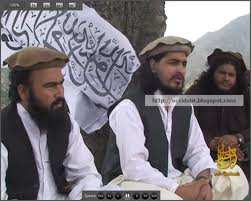
TTP Leaders Address Media (Courtesy: mediawatch.pk)

TTP explains and elaborates reasons that motivated them to attempt target-killing of Malala: TTP successfully targeted Malala Yousafzai in Mingora, although she was young and a girl and TTP does not believe in attacking on women, but whom so ever leads campaign against Islam & Shariah is Ordered to be killed by Shariah.

When its a matter of Shariah, and someone tries to bring fitnah with his/her activities, and it involves in leading a campaign against shariah and tries to involve whole community in such campaign, and that personality become a symbol of anti shariah campaign, not just its allowed to kill such person but its Obligatory in Islam.

If anyone Argues about her so young age , then the Story of Hazrat Khizar in Quran that relates that Hazrat Khizar while Traveling with Prophet Musa (AS) killed a child, arguing about the reason of his killing he said that the parents of this child are Pious and in future he will cause bad name for them. If anyone argues that she was female, then we can see the incident of killing of wife by a blind Companion of Prophet Muhammad (S.A.W.W) because she use to say insultive words for prophet.And prophet praised this act.

Its a clear command of shariah that any female, that by any means play role in war against mujahideen, should be killed.Malala Yousafzai was playing a vital role in bucking up the emotions of Murtad army and Government of Pakistan, and was inviting muslims to hate mujahideen.

Tehrik taliban’s crime wasn’t that they banned education for girls, instead our crime is that we tried to bring Education system for both boys and girls under shariah.We are deadly against co-education and secular education syestem, and shriah orders us to be against it.

If anyone thinks thinks that Malala is targeted because of education, that’s absolutely wrong, and a propaganda of Media, Malala is targeted because of her pioneer role in preaching secularism and so called enlightened moderation. And whom so ever will commit so in future too will be targeted again by TTP.

After this incident Media pour out all of its smelly propaganda against Taliban mujahideen with their poisonous tounges, they are shouting that malala has suffered tyranny like there is no else in the country whom is facing same.Were our sister in lal masjid whom were bombed, gassed and burnt to death, were not humans?? and the sinless women and children of swat , bajour, mohmand, orakzai, & Wazeeristan whom suffered inhumane bombardments by Murtad army don’t qualify to bestow mercy upon them?

Will the blind media pay any attention to Hundreds of Respectful sisters whom are in secret detention centers of ISI and MI and suffering by their captives? Will you like to put an eye on more then three thousand young men whom are killed in secret detention centers and their bodies are found in different areas of swat, claimed to be killed in encounters and died by Cardiac Arrest?? Gain Conscious, Otherwise………… Ihsan-ullah-Ihsan Central spokesman TTP

Malala won’t be airbrushed out

Malala Yusufzai (Credit: huffingtonpost.co.uk)

“I AM worried about Malala. The whole of Swat is worried about her. But every girl in Swat is Malala. We’ll educate ourselves. We will win. They can’t defeat us.”

This was a teenaged classmate of Malala Yousufzai being interviewed live on TV from Mingora. Steeped in courage, her words were delivered with indescribable resolve, a beaming face. Such resolve that a pessimist like me felt she was delivering a stinging slap on my cheek.

Then there was Kainaat. She was travelling in the same school van as Malala and was also wounded in the attack. Her determination appeared equally steely. She was certain nothing was going to stop her from returning to school with the eventual aim of becoming a doctor.

Then as one surfed channels many more Malalas were expressing admiration for their iconic schoolmate. Not one appeared unsure of the way forward. What can you do but salute the tenacity of the girls as well as their lion-hearted parents?

And the teachers. Malala’s teacher spoke with great pride, warmth and affection for his student, the child prodigy: “Such children aren’t born every day. She’s such a gifted child. It is our collective responsibility to support her, protect her. The government must do its part.”

Many months ago when this column focused a tad too frequently on the content of Pakistani TV discussion programmes, my editor advised against too much focus on this one area. He was right.

On this particular occasion, however, one was grateful for the idiot box as a diversity of opinion was beamed directly into the comfort of one’s study. This is where the gratitude ended. To say that the entire spectrum was not welcome would be an understatement.

Pakistan has come to represent such a roller-coaster that it seems to strive daily to live up to Dicken’s words: “… it was the season of light, it was the season of darkness, it was the spring of hope, it was the winter of despair …”

The TV output was no different. It mirrored society.

There was good news. Despite being shot at point-blank range in the head, Malala was somehow going to defy the assassin with her now legendary single-mindedness. She would survive. There were also the voices of her courageous (the word seems so inadequate) friends and classmates.

But then Jamaat-i-Islami’s former amir Qazi Hussain Ahmad made an appearance. He seemed to condemn the attack on the teenaged Swat student and in the same breath also condemned those who, in his words, “used Malala”. He didn’t elaborate. Neither was he asked to.

This was the first in a series of ‘we condemn the attack but…’ statements. Qazi Hussain Ahmad was not the only one who was not willing to condemn this dastardly attack without qualifying his condemnation. Many others created binaries where none existed.

Imran Khan came in for stick on social media for his perceived support to the Taliban but hasn’t he demonstrated his disdain for extremism? Wasn’t he one of the few politicians in the country to visit the bloodied Shia-Hazaras in Quetta, in rushing to Chilas after the mass murder of Shia travellers?

Referring to the attempt on Malala’s life, he talked about the scourge of extremism which he mostly blamed on the US-led war on terror. When the presenter pressed him to name the attackers, Imran Khan reluctantly said the Taliban.

When asked to condemn the Taliban, he was open in saying his party had a presence in Khyber Pakhtunkhwa and Fata and that he didn’t want to give statements condemning the Taliban and leave “my party workers undefended” at their mercy.

This statement at least clarified that he has shied away from unequivocally slamming the Taliban for the sake of his party workers’ safety and not on ideological grounds. One suspects the PTI leader understands the sort of threat the ANP and PPP must face at each of their public events.

This must be a major handicap for his rivals. As election approaches, the PTI is able to gather large crowds every few days in relative safety. Mr Khan must be hoping this generates enough momentum to have a snowball effect at the poll, leaving his Taliban-targeted opponents stranded.

This may be a fantastic tactical move. One hopes he has strategic options up his sleeve so he doesn’t end up risking a Kargil-type situation. Our army has scored similar own goals including the one manifesting itself in the militant threat that has claimed thousands of our soldiers besides civilians.

It was never a conflict we could afford to lose. Factors such as archaic tribal and feudal practices mean a steady diet of abuse of women’s rights anyway. Whether jirgas sanction wani or honour killings; whether it is gang rape or acid attacks we know the victim is almost always a woman.

Now religious extremism has created a new form of women’s oppression. This may owe its birth to a parallel national narrative contrived in the Zia years but it has also grown, gone from strength to strength unchallenged since. Before we move on it is vital to decide on one, single narrative.

Otherwise, this mix of confusion, polarisation and the paralysis it causes will destroy us. We have to somehow acknowledge we live in the 21st century, and are part of a larger world.

Women are more than half our population. Isn’t it an economic and social imperative that women and men are equal?

The Taliban and other forces of darkness would so wish they could do here in all public spaces what the well-known Swedish store chain Ikea did in Saudi Arabia: airbrush women models off their catalogue.

Thank God they can’t. Malala stands in their way. Their ideology may be toxic; her determination is life-affirming. Just imagine what’ll happen if Malala inspires millions of people, particularly the weak-kneed like me, to stand up for once and be counted.

The writer is a former editor of Dawn.
abbas.nasir@hotmail.com


Teenage School activist survives attack by Taliban

Malalai Yusufzai after attack (Credit: english.alarabiya.net)

KARACHI, Oct 9— A Taliban gunman shot and seriously wounded a 14-year-old schoolgirl and activist in the Swat Valley in northwestern Pakistan on Tuesday, singling out a widely known champion of girls’ education and a potent symbol of resistance to militant ideology.

The attack occurred in Mingora, the valley’s main town, when masked gunmen stopped a bus carrying schoolgirls who had just taken an exam and sought out the 14-year-old, Malala Yousafzai, shooting her twice.

Ms. Yousafzai, who won a national peace prize last year, was shot in the head and the neck, while two other people on the bus suffered lighter injuries, local health officials said. After emergency treatment, Ms. Yousafzai was taken by helicopter to a military hospital in the provincial capital, Peshawar, where doctors said she was in stable but critical condition late Tuesday.

The Pakistani Taliban claimed responsibility for the attack, saying Ms. Yousafzai had been targeted for her criticism of the Taliban and because it considered her human rights campaigning to be an “obscenity.”

“She has become a symbol of Western culture in the area; she was openly propagating it,” a Taliban spokesman, Ehsanullah Ehsan, said by phone from an undisclosed location. “She considers Obama as her ideal leader.”

The Taliban publicly placed Ms. Yousafzai on its assassination hit list this spring. Mr. Ehsan added that if she survived, the militants would try to kill her again. “Let this be a lesson,” he said.

Although militant violence is a daily occurrence in Pakistan, the assault on an eloquent schoolgirl, who sprang to public attention in 2009 by documenting her determination to continue school under the Taliban, sent shock waves across Pakistan.

“She symbolizes the brave girls of Swat,” said Samar Minallah, a documentary filmmaker who has worked extensively in Swat. “She knew her voice was important, so she spoke up for the rights of children. Even adults didn’t have a vision like hers.”

Girls’ education in Pakistan has been a rallying cry against the Taliban for some here. In other districts close to the Afghan border, militants have shut down schools in recent years as a way of demonstrating their defiance of the national government.

Mustafa Qadri, a Pakistan researcher with Amnesty International, said the attack on Ms. Yousafzai “highlights the extremely dangerous climate many human rights activists face in northwestern Pakistan, where female activists in particular live under constant threats from the Taliban and other militant groups.”

Fazal Rabbi, a family friend in Swat, described Ms. Yousafzai as a girl of “extraordinary qualities.” In Parliament, Prime Minister Raja Pervez Ashraf urged his countrymen to battle the “mind-set” behind such attacks. “She is our daughter,” he said.

On the Internet, the country’s beleaguered progressives seethed with frustration and anger. “Come on, brothers, be REAL MEN. Kill a school girl,” one media commentator, Nadeem F. Paracha, said in an acerbic Twitter post.

Ms. Yousafzai came to public attention in 2009 as the Pakistani Taliban swept through Swat, a picturesque valley once famed for its culture of music and tolerance and as a destination for honeymooning couples.

Her father ran one of the last schools to defy Taliban orders to end female education. As an 11-year-old, his daughter Malala — named after a mythic female figure in Pashtun culture — wrote an anonymous blog documenting her experiences for the British Broadcasting Corporation.

“I had a terrible dream yesterday with military helicopters and the Taliban,” she wrote in one post titled “I Am Afraid.”

Later in 2009, the army launched a sweeping operation against the Taliban in the area, displacing many militants into neighboring districts or across the border into Afghanistan.

Ms. Yousafzai continued to grow in prominence, becoming a powerful voice for the rights of children in the conflict-affected area. In 2011, she was nominated for an International Children’s Peace Prize; later, Yousaf Raza Gilani, the prime minister at the time, awarded her Pakistan’s first National Youth Peace Prize.

In recent months, she led a delegation of children’s rights activists, sponsored by Unicef, that made representations to provincial politicians in Peshawar.

“We found her to be very bold, and it inspired every one of us,” said another student in the group, Fatima Aziz, 15.

“She had this vision, big dreams, that she was going to come into politics and bring about change,” said Ms. Minallah, the documentary maker.

Pakistan’s military has long held the 2009 Swat operation as an example of its ability to conduct successful counterinsurgency drives on its own soil. The shooting on Tuesday, however, was a stark reminder that the Taliban remain a deadly force.

“This is not a good sign. It’s very worrisome,” Kamran Khan, the most senior government official in Swat, said by phone. A search operation was under way to capture the attackers, he added.

In recent months, Taliban fighters have been gradually slipping back into Swat, attacking senior community leaders. On Aug. 3, a Taliban gunman shot and wounded Zahid Khan, the president of the local hoteliers association and a senior community leader, in Mingora.

A senior local official said it was one of three attempted targeted killings by the Taliban in recent months.

The Swat Taliban are a subgroup of the wider Pakistani Taliban movement based in South Waziristan. The leader of the Swat Taliban, Maulvi Fazlullah, rose to prominence in 2007 through an FM radio station that espoused Islamist ideology. He is believed to be sheltering across the border in the Afghan provinces of Kunar and Nuristan.

The Pakistani Army virtually runs Swat, either directly through a large military presence in the valleys, or indirectly through armed militias that keep the Taliban at bay. But the military has also been accused of gross human rights abuses, particularly after a leaked videotape in 2010 showed uniformed men apparently massacring Taliban prisoners.

In response to sharp criticism, the army chief, Gen. Ashfaq Parvez Kayani, announced an inquiry into the shootings. An army spokesman said on Tuesday it had not yet completed its work.

Shah Rasool, the police chief in Swat, said that all roads leading out of Mingora had been barricaded and that more than 30 militant suspects had been taken into custody.

Reporting was contributed by Sana ul Haq from Mingora, Pakistan; Ismail Khan from Peshawar, Pakistan; Ihsanullah Tipu Mehsud from Islamabad, Pakistan; and Zia ur-Rehman from Karachi.